
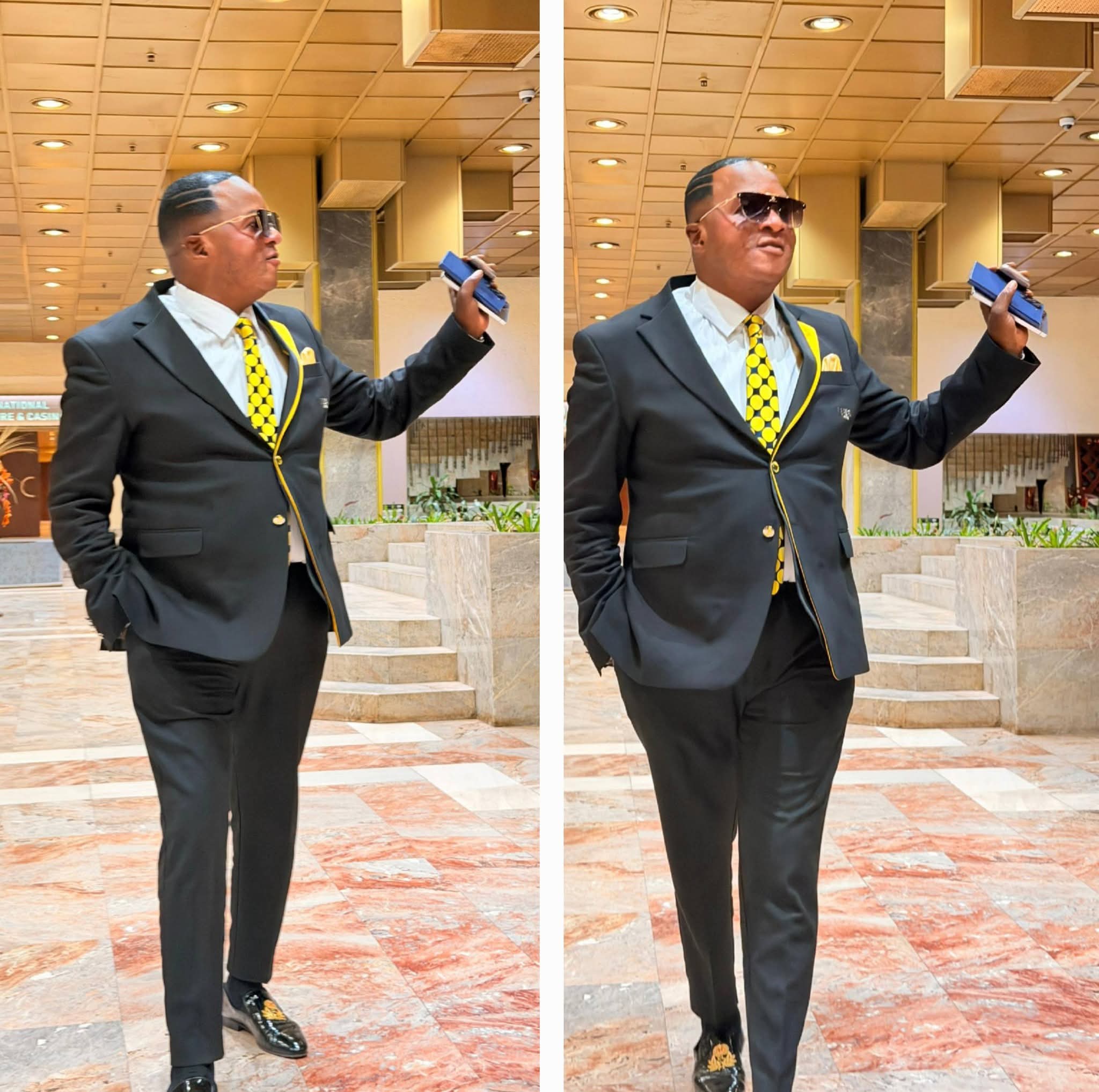
Rev Dr. Musindo reveals Christian support for Constitutional Amendment Bill Number 3
Staff Reporter
In a high-energy display of political and spiritual alignment, Rev. Dr. Obadiah Musindo, founder of the Destiny of Afrika Network (DANet), took to the stage in Chinhoyi this past Saturday in revealing how majority of Christians in the country are in support Constitution Amendment Bill No. 3.
Amidst the echoes of the popular anthem “Mnangagwa Ishasha,” Musindo made the stunning revelations before hundreds of Christian followers and top-ranking ZANU-PF Chinhoyi leadership in a public endorsement of Constitutional Amendment Bill Number 3 , framing the bid as a necessary step toward realizing the nation’s Vision 2030 goals.
Standing unapologetic in his stance, the DANet leader argued that President Mnangagwa’s developmental agenda—ranging from infrastructure overhauls to the issuance of title deeds—requires a leadership mandate that transcends current constitutional limits.
“I asked those opposing the Constitutional Amendment Bill 3, that how many of the Christians are being represented by your views? Why are you speaking on their behalf? Making matters worse the Catholic Bishop’s Conference together with their associates they never consulted any of their churches. But in fact a total of more than 4 million Christians are i. Support of this Bill. Many Christians have seen good things done by the Second Republic which is the reason why they are in support of CAB 3. These include Main line churches, Catholics, Methodist, Anglican, Pentecostals, Zionists, Masowe and many more, ” he said.
Musindo went as far as to invoke the legacy of the late Robert Mugabe, suggesting that even the former president would marvel at the current pace of national development. With ruling party officials looking on, Musindo further asserted that frequent elections have become a hurdle to Zimbabwe’s stability, effectively calling for a shift in focus from the ballot box to the completion of the “New Dispensation’s” economic mandate.
“If the late Former President RG Mugabe was rise feom the dead he would tell you that he is happy with the way President Mnangagwa is developing this Country. The President has done a lot for many Zimbabweans which is the reason why most of you the Christian Community are in support of Bill Number 3. “
By leveraging his influence within the Destiny of Afrika Network (DANet), Musindo is effectively bridging the gap between spiritual leadership and political policy. Here is an expanded look at the implications of this event:
1. The Theological Endorsement of “Ishasha”
Musindo’s use of the song “Mnangagwa Ishasha” (meaning “Mnangagwa is the Champion/Expert”) serves a dual purpose. It frames the President not just as a political leader, but as a uniquely qualified “architect” of Zimbabwe’s future.
- The “Resurrection” Narrative: By invoking the late Robert Mugabe’s hypothetical approval, Musindo seeks to heal the factional rift that has existed since the 2017 transition. It’s a powerful rhetorical tool aimed at traditional ZANU-PF supporters who remain loyal to Mugabe’s memory, suggesting a continuity of “The Struggle” through Mnangagwa.
- “Every leader has his own mandate. Mugabe fulfilled his mandate of taking land from the White farmers. Now we have President ED Mnangagwa. His has a huge mandate which include engaging and re-engaging, fulfillment of title deeds, addressing the land issues. Infrastructure development, roads amd many other issues. These are crucial for the President to complete his term.
2. The Developmental Argument vs. Electoral Cycles
A key takeaway from Musindo’s speech is the claim that elections halt progress.
“Elections were stalling national progress because everyone will always be in the elections mood. The Bill seeks to make our President complete his projects and developments which he has initiated”
This argument suggests a shift toward “developmental authoritarianism,” where:
- Continuity over Contestation: The focus shifts from five-year democratic cycles to long-term infrastructure projects.
- The Mandate of Completion: By highlighting title deeds and road construction, Musindo frames the 2030 extension as a practical necessity rather than a political power grab. He argues that changing leadership mid-stream would jeopardize current economic gains.
3. Socio-Economic Impact of DANet
As a leader who deals heavily in housing and land through DANet, Musindo’s endorsement carries weight with the urban and peri-urban poor.
“If you you don’t want President ti complete his project i am telling you that you will not have a guarantee in getting title deeds to the land you are occupying today. Sometimes we need to use common sense. This is a leader who is completing everything for you. Can’t you see its better to criticize Mnangagwa once you obtain your title deeds. We have some people who are actually just criticising CAB. 3 yet they don’t have title deeds to the land they are occupying. You have already seen how people in Epworth have received title deeds from the President. ”
- Title Deeds as Political Capital: The promise of title deeds is a massive leverage point in Zimbabwean politics. By linking this directly to Mnangagwa’s extended stay in office, Musindo is signaling to thousands of homeowners that their legal security is tied to the current administration’s longevity.