Tendai Keith Guvamombe
The volatile conflict in eastern Democratic Republic of Congo (DRC) has taken a significant diplomatic turn as the Rwanda-backed M23 rebel group announced its intention to withdraw from the strategic border town of Uvira.
This decision follows a stern warning from the United States administration, which characterized the recent seizure of the town as a direct threat to international mediation efforts and a grave violation of newly minted peace agreements.
The withdrawal highlights the intense pressure being exerted by Washington to prevent a total collapse of security in Central Africa.
The escalation occurred less than a week after the presidents of Congo and Rwanda met with US President Donald Trump in Washington to sign the “Washington Accords.”
This peace deal was intended to stabilize a region that has seen decades of bloodshed.
However, the rebel capture of Uvira—a critical port town on the border with Burundi—was seen by the White House as a blatant breach of those diplomatic promises.
US Secretary of State Marco Rubio reacted sharply to the incursion, vowing to “take action” to ensure that the commitments made to the President are upheld, signaling a shift toward a more muscular US foreign policy in the region.
In response to the international outcry, Corneille Nangaa, leader of the Congo River Alliance which includes M23, described the planned retreat as a “unilateral trust-building measure.”
Nangaa stated that the move is intended to provide the Doha peace process—a parallel track of negotiations hosted by Qatar—the maximum chance to succeed. While M23 is not a formal party to the Washington-mediated talks, they have been participating in these separate discussions with the Congolese government, creating a complex, multi-layered diplomatic environment where various global powers are vying for influence.
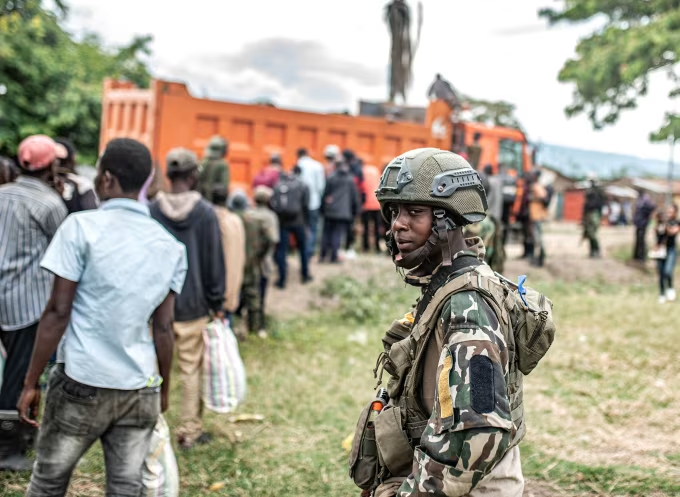
Despite the announcement of a pullout, the situation on the ground remains tense and uncertain. Reports from rebel sources indicate a plan where both M23 and Congolese government forces would withdraw five kilometers from Uvira to establish a neutral buffer zone.
However, civil society activists in the town reported on Tuesday that rebel fighters were still present, raising concerns about whether the withdrawal is a genuine move toward peace or a tactical repositioning.
As the M23 continues to establish parallel administrations in seized territories, the international community remains wary of an enduring fracture that could permanently divide the DRC.