
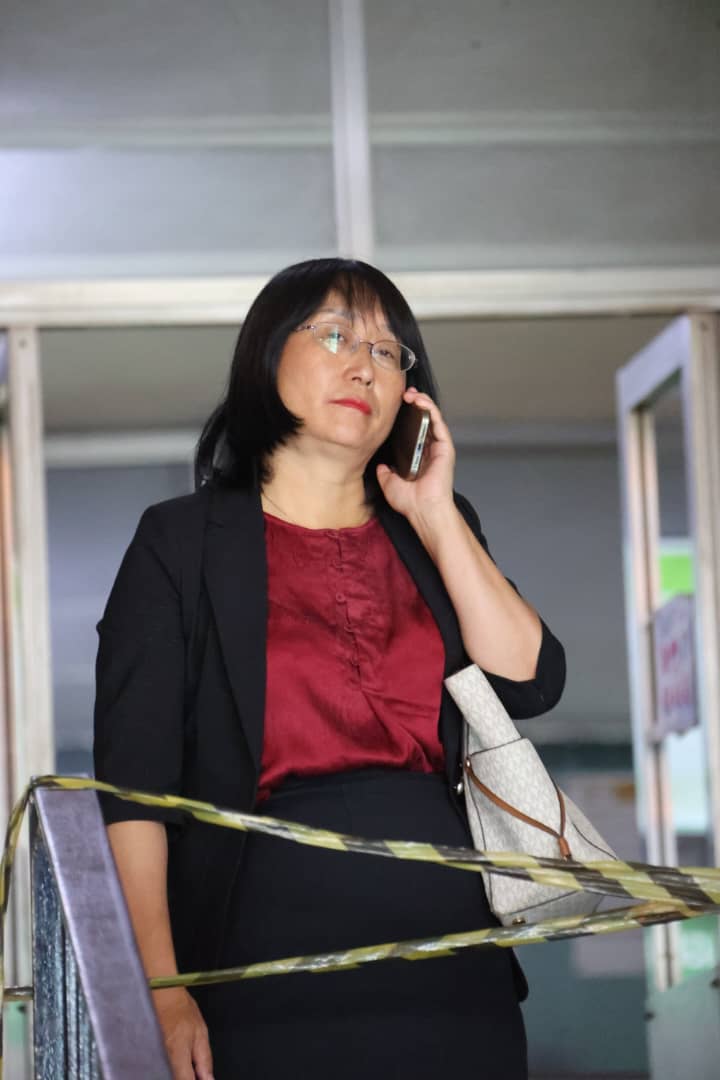
Deported “security threat” Chinese National pushes interests through proxies in Zimbabwe
By staff reporter
A deported Chinese National who was deported over national security threats last year has been engaging some exiled Zanu PF politicians promising them funds to destabilize the Zanu PF led government after she was declared hostile by the current regime.
The Chinese National Li Song is allegedly also working with some government officials, court officials, National Prosecuting Authority, police amongst others in bid to keep holding her business interests in the country which are facing imminent collapse after her deportation.
According to a reliable source who refused to be named, Li Song recently met with Saviour Kasukuwere at a restaurant in Midrand, Gauteng, South Africa where they discussed modalities.
It is alleged at the meeting she was given Zimbabwean contacts of officials from the police, Zimbabwe Anti-corruption Commission, Judicial Service Commission and National Prosecuting Authority to work with in a bid to protect her businesses interests in the country.
The source said the recent arrests of her former business partner Francesco Marconati on flimsy grounds is as a result of the said meeting saying one of the police commissioner Jealous Nyabasa is leading in the arresting of Marconati.
There are also names that were included in the game plan that included, named senior Zacc official, Tendai Shonhai a director in the NPA, Walter Chikwanha in the JSC.
Song has several business interests in the country and her former company Eagle Italian Shoes and Leather was supplying leather products to the Zimbabwe National Army, Zimbabwe Republic Police and Zimbabwe Correctional and Prison Services.
According to the same sources Kasukuwere once worked with Song during the time he was the minister of environment where several elephants were poisoned with cyanide resulting in the global outcry by Environmentalists.
Before her forced deportation,some senior officials within the Zimbabwe’s national police were reluctant to pursue Li Song, who was at the centre of a poaching network that uses the deadly chemical cyanide to kill animals in the country’s game reserves.
Li was arrested in 2024 by the Zimbabwe Anti-Corruption Commission (ZACC) for allegedly importing large quantities of cyanide fraudulently and storing the toxic substance in unsafe locations.
According to court records, in August 2024 Harare magistrate Dennis Mangosi issued a warrant for her arrest after Li failed to appear in court, leading to suspicion by authorities that she could have escaped and returned to her home country, China.
The case involves alleged misrepresentation to the Zimbabwe Revenue Authority over the importation of sodium cyanide, a salt of cyanide that turns into a toxic gas when it interacts with water.
According to court documents, Li was born on January 20 1972 in Henan province in central China. She arrived in Zimbabwe in 2003. She has been reported to be linked to top government officials (names provided) who allegedly provide her protection against a litany of cases she faces in a country ridden with corruption.
According to sources who were closely linked to her, Li arrived in Zimbabwe under modest circumstances and worked as an official interpreter for a Chinese construction company, China First. The company had numerous contracts in the country. The sources say Li would claim that her father was a high-ranking general in the Chinese army, whom she allegedly claimed supported her in her ventures.
It was further established from the same sources that Li later purchased China First after it had gone under the hammer. The interpreter had transformed into a businesswoman, acquiring various properties, including upmarket houses in Beijing and Henan.
According to court documents, the 2024 cyanide case involved DGL9 Investments Pvt Ltd, a mining company based in Inyathi in Zimbabwe’s Matabeleland North province. Li is a former director of the company and her co-accused, Bernadette Mukuku, is a former employee.
According to state papers, Li and Mukuku falsely represented to the Zimbabwe Revenue Authority that a consignment of sodium cyanide and hydrated lime they imported from Mauritius was conducted by the company, whereas it was done in their personal capacity. This enabled them to avoid paying customs duty of US$40,000. Police investigations have pointed to the use of the two chemicals in wildlife poaching in the country.
The case was initially heard at Bulawayo Magistrates’ Courts – case number BCR05/03/24 – before it was transferred to Harare under unclear circumstances.
Cyanide poisoning has been a significant threat to elephants in Hwange National Park, Zimbabwe’s biggest nature reserve with an estimated 50,000 elephants.
In 2013 poachers killed more than 300 elephants by poisoning salt and water pans with the lethal chemical. Over the years since incidents have continued, with 14 elephants poisoned in October 2015 in three separate incidents within the park and nearby Deka Safari area.
According to a dossier of court documents in our possession, Li has faced other allegations beyond wildlife crimes, including fraud, forgery, theft of trust property, money laundering and even attempted murder. Despite the gravity of the accusations, the complainants say the cases have not been pursued by authorities.
The documents show that Li, who had been in a business partnership with her former boyfriend Marconati, was removed as director of Eagle Italian Shoes Pvt Ltd and Eagle Italian Leather Pvt Ltd in October 2021. Marconati filed a case in November 2021 accusing Li of the unlawful and forced sale of shares in the two companies.
In May 2022 he opened another fraud and forgery case at Bulawayo Central Police Station, accusing Li of forging an invoice from South African chemical supplier Cure Chem Investments. The case was later moved to Harare after no action was taken by Bulawayo police.
Marconati also accuses her of illegally transferring more than US$809,000 from Eagle Italian Shoes and other Marconati-linked companies to offshore entities. This allegedly involved movement of funds through Ecobank Zimbabwe to a Mauritius Commercial Bank account. The matter was also reported to the Reserve Bank of Zimbabwe, according to the documents in our possession.
As a follow-up to what he believes to be sluggish progress in addressing his complaints, in April 2024 Marconati lodged complaints with the ZAAC, the Commissioner General of Police and the Prosecutor General.
In January 2024, Marconati wrote to Prosecutor General Loice Matanda Moyo, requesting a meeting to discuss evidence that Li had used her Mauritius-based company, Jacaranda, to siphon large sums from Zimbabwe. He accused her of breaching trust and covering her tracks with help from “unnamed individuals”, vowing continued efforts to recover the lost assets, according to the court documents.