
By Tendai Keith Guvamombe
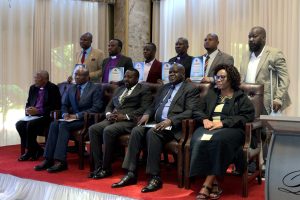
HARARE – The Government has commended the church for taking what it described as a bold and visionary step to confront abuse, exploitation and governance deficiencies within religious institutions through the launch of the Zimbabwe Christian Ministers Association (ZCMA) Foundership and Governance Programme.
Speaking at the launch in Harare on May 21, Deputy Minister of Justice, Legal and Parliamentary Affairs, Norbert Tichawona Mazungunye praised the initiative, saying it reflected the church’s willingness to introspect and strengthen accountability systems at a time when some religious institutions were facing increasing scrutiny over misconduct and abuse.
“I wish to commend the Zimbabwe Christian Ministers Association, church mother bodies, and stakeholders for this bold and visionary undertaking,” Hon. Mazungunye said in his keynote address.
“Scripture reminds us in Proverbs 29:18 that ‘where there is no vision, the people perish.’ By embracing this programme, the Church demonstrates foresight and responsibility in ensuring that its institutions remain pillars of integrity and hope.”
The initiative by the Zimbabwe Christian Ministers Association received backing from several church mother bodies and faith-based organisations, including the Zimbabwe Council of Churches, Federation of Independent Churches, Apostolic Christian Churches of Zimbabwe, Union for the Development of Apostolic Churches in Zimbabwe Africa (UDACIZA), Zimbabwe Network of Churches, Association of Thological Colleges in Zimbabwe, National Multi-Faith Economic Dialogue (NAMFED), Evangelical Fellowship of Zimbabwe, Patriotic Churches in Zimbabwe, Pastors4ED, Board of Christ United, Chaplains of Zimbabwe, Global Fellowship of Christian Chaplains, Bible League International, Working With People Trust, Working for All Trust and Together for All.
Following the launch, the Zimbabwe Christian Ministers Association, in partnership with Government departments and strategic stakeholders, will embark on a nationwide outreach and training programme aimed at equipping faith leaders with essential knowledge and skills in good governance, accountability, ethical leadership, and institutional integrity.
Bishop Dr Christopher Choto, the president of the Zimbabwe Christian Ministers Association underscored that the initiative seeks to strengthen leadership systems within churches and promote responsible, transparent, and values-driven ministry across the country.
The Deputy Minister said the programme represented more than an administrative exercise, describing it as a decisive intervention aimed at strengthening governance, ethical leadership and institutional integrity within the faith sector.
“This initiative is not merely administrative; it is a covenantal step towards strengthening governance, accountability, ethical leadership, and institutional integrity within the faith sector,” he said.
His remarks placed the spotlight on growing concerns over abuses and governance failures within some churches, with Government openly welcoming the church’s attempt to self-correct through stronger internal systems.
In one of the strongest sections of his speech, Hon. Mazungunye directly addressed cases of misconduct within religious institutions, insisting that church leadership should never be used as a vehicle for exploitation.
“We must also confront challenges with honesty. Cases of abuse and exploitation within some religious institutions are contrary to both biblical teaching and constitutional values,” he said.
“The pulpit must remain a place of hope and truth, never a platform for manipulation.”
The Deputy Minister stressed that ministerial authority carried moral and institutional obligations, warning church leaders against personal enrichment and unaccountable leadership.
“Church leaders must uphold accountability and transparency. Ministerial authority is a sacred trust, not a tool for personal enrichment,” he said.
“Leadership must reflect servant-heartedness, and decisions must be guided by accountability structures within the Church, consistent with constitutional values of dignity, equality, and freedom.”
Government, he said, viewed legal compliance by churches not as interference but as a safeguard for legitimacy, credibility and sustainability.
“Compliance with the laws of Zimbabwe, registration, financial accountability, and labour standards is essential for legitimacy and credibility,” Hon. Mazungunye said.
“Compliance is not interference; it is protection, order, and sustainability. Just as the commandments provided boundaries for righteous living, our laws provide boundaries for just governance.”
The Deputy Minister also underscored the importance of cooperation between the church and the State, saying the relationship had become increasingly important under the Second Republic.
He said Government had deliberately created platforms for church participation in governance processes, recognising the role faith institutions play in shaping moral consciousness and national development.
“The Government has deliberately incorporated the Church into governance structures, task forces, advisory platforms, and national committees, recognising that sustainable development cannot be achieved without moral consciousness,” he said.
“This partnership reflects our shared commitment to Vision 2030 and the National Development Strategy 2 (NDS2), where the Church contributes to education, health, peace building, and cultural preservation.”
Hon. Mazungunye said the justice ministry’s constitutional mandate resonated strongly with the church’s mission, as both institutions sought to protect vulnerable communities and promote accountability.
“The synergy between law and faith is evident: both seek to protect the vulnerable, promote accountability, and ensure that authority is exercised responsibly,” he said.
He further noted that the country’s constitutional order guaranteed freedom of religion while simultaneously demanding responsible governance.
“In the same spirit, Zimbabwe’s constitutional order enshrines fundamental rights and freedoms, including the right to freedom of conscience and religion under Section 60 of the Constitution of Zimbabwe,” he said.
As he concluded, the Deputy Minister expressed optimism that the Foundership and Governance Programme would help produce accountable and visionary church leaders capable of positively influencing both the religious sector and national development.
“May this programme produce visionary, responsible, and accountable leaders who will positively impact both the Church and the nation,” he said.
“Together, let us build a peaceful, united, prosperous, and God-fearing Zimbabwe.”