
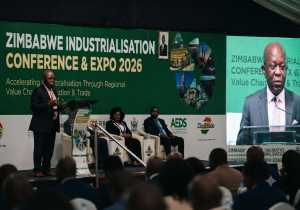
By Tendai Keith Guvamombe
Unlocking rural industrialization has been recognized as a vital opportunity with the potential to significantly boost the national Gross Domestic Product (GDP). This came to light during the ongoing Zimbabwe Industrialization Conference and Expo 2026 in Harare.
”Under NDS2, rural industrialization is part of economic transformation. This is central to inclusivity—making sure that no region is left behind. Shifting our focus from raw materials to value addition will contribute to the national GDP. This will actually result in the creation of jobs and other opportunities,” stated Manungo.
In a presentation by the Deputy Chief Secretary to the President and Cabinet for Policy Analysis, Coordination and Development Planning, the government emphasized that rural development is an integral component of Zimbabwe’s economic development agenda. The general perspective is that utilizing untapped resources and driving value addition will immensely contribute to the national economy.
Manungo also highlighted a plethora of challenges historically faced by rural constituencies, ranging from inadequate infrastructure and digital gaps to market constraints and energy deficits. Against this background, the government—through the National Development Strategies (NDS1 and NDS2)—has prioritized responsive measures to scale up development in these target areas.
”Under NDS 1 and NDS 2, the government has addressed challenges being faced in rural areas, such as infrastructure development and digitalization. Access to energy is quite critical; the government has put in place solar initiatives and grid expansion into rural areas. All of these are critical to facilitating the beneficiation of rural areas,” he added.
A key intervention from the government is the proposed rural incentive framework, which is designed to enhance the ease of doing business in rural regions.
”We have also seen the need to come up with an incentive framework that ensures we facilitate rural industrialization and its integration into the broader course of national development,” Manungo noted.
Ultimately, successful rural industrialization will also help curb rural-to-urban migration, easing the congestion of economic activities in major urban centers.