
By Mohammed Hadebbe(Lusaka Zambia)
Joseph Kalimbwe’s Shifting Sands: The Impact of Donor Funding on African Political Discourse
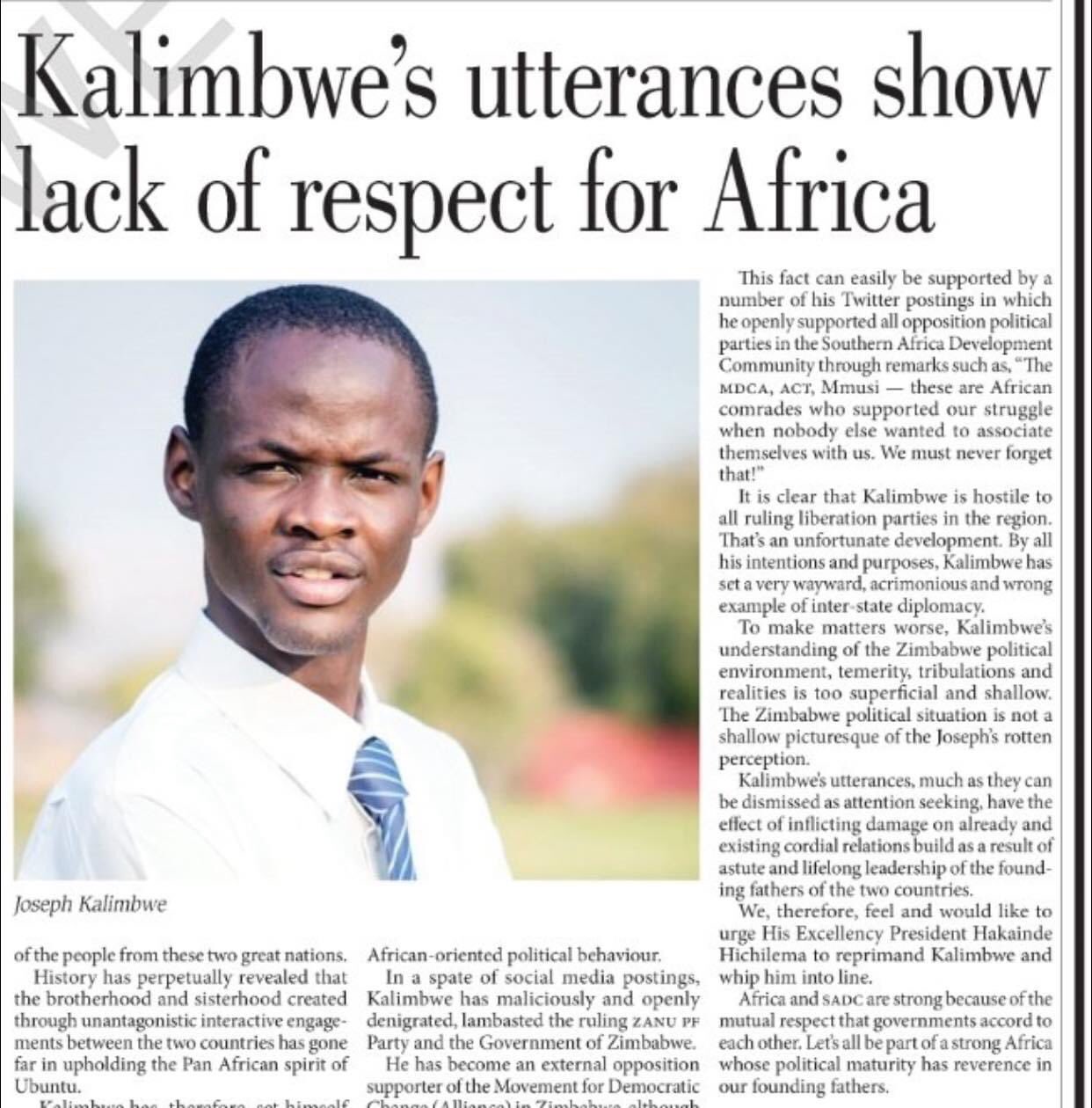
Joseph Kalimbwe, a prominent Zambian social media personality and activist, is reportedly facing significant challenges due to a shift in US foreign aid policy.
The change, attributed to the Trump administration’s focus on “trade, not aid,” is said to be impacting the flow of funding that previously supported certain media and civil society activities across Africa.
Kalimbwe’s situation is being cited as a prime example of how external funding can shape political narratives on the continent.
Sources suggest that Kalimbwe’s past political commentary, which often took a critical stance against certain leaders and governments, particularly targeting Zimbabwe’s Zanu-PF and President Emmerson Mnangagwa, was underwritten by financial support from Western sources.
This has led to a conversation about “media imperialism,” where individuals are allegedly used as tools to advance foreign agendas and destabilize established political structures.
The narrative suggests that Kalimbwe was a key figure in attempts to influence the Pan-Africanism agenda, specifically at the Pan-African Parliament, through consistent attacks on leaders like Chief Fortune Charumbira.
His alleged financial troubles, stemming from a reduction in US donor aid, have brought to light the vulnerability of such a model and the potential for a new form of economic imperialism where individuals are incentivized to challenge African unity and development goals.
Despite these challenges, the rise of organic Pan-African movements across the continent suggests a growing desire for self-determination.
The consensus among African legislators to uphold the African Union Agenda 63 is seen as a powerful signal that the continent is poised to rise and chart its own course, free from external influence.