
By Tendai Keith Guvamombe
Midrand, South Africa – A decade after African leaders committed to self-financing the African Union (AU), the continental body continues to grapple with significant funding shortfalls, impacting its ability to deliver on crucial mandates, including the ambitious Agenda 2063.
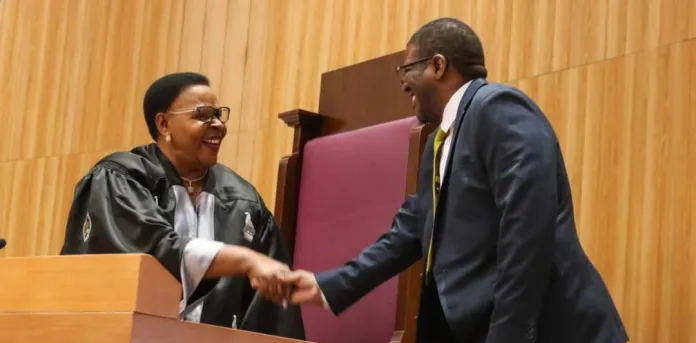
This was the stark message delivered by H.E. Amb. George M. Orina of Kenya during the 5th Ordinary Session of the 6th Parliament of the Pan African Legislature in Midrand on July 22nd, 2025.
In 2015, during the 25th Ordinary Session of the AU Assembly in Johannesburg, Member States pledged to fund 100% of the AU’s operational budget, 75% of the programme budget, and 25% of AU Peace Support Operations.
However, Ambassador Orina, who chairs the PRC Sub-Committee on General Supervision and Coordination of Budgetary, Financial and Administrative Matters, revealed a concerning reality: “We have fallen short of the Johannesburg financing targets.”
Illustrating the severity of the situation, Ambassador Orina noted that the AU Budget for the 2026 Financial Year is approximately 10% lower than that of 2020. Member States have been directly assessed $200 million for the past three years, a figure that pales in comparison to the continent’s expansive needs.
The urgency for Africa to finance its own priorities is heightened by a shifting global landscape. Conflicts in Europe and the Middle East, coupled with the lingering effects of the COVID-19 pandemic and a rise in insular agendas, have strained traditional strategic partnerships and humanitarian aid flows.
Ambassador Orina pointed to the recent NATO Summit in The Hague, where leaders pledged to invest 5% of their countries’ GDP on defense spending, a move expected to further shrink resources for peace and security initiatives outside the NATO zone.
Compounding the challenge are competing national priorities within AU Member States, many of which are developing countries still grappling with the “reprehensible legacy of colonialism.”
The increasing domestic resource requirements often outpace national capacities, forcing a delicate balance between national obligations and continental commitments.
Despite these hurdles, Ambassador Orina stressed the critical importance of multilateralism and collective investment in Africa’s future.
He highlighted the establishment of vital institutions like the African Continental Free Trade Area (AfCFTA), Africa CDC, and the African Humanitarian Agency (AfHA) since 2015, all crucial for Agenda 2063. However, effectively funding these new organs remains a significant challenge.
In response to these persistent issues, H.E. Dr. William Samoei Ruto, Champion of AU Institutional Reform, proposed a Special Summit on AU Reforms in 2025 to specifically address financing. This, coupled with the work of the Committee of Fifteen Ministers of Finance (F15) and the implementation of nine “Golden Rules” for financial management, aims to strengthen the Union’s financial health.
Ambassador Orina concluded with a resolute call to action: “We must be ready to make difficult and uncomfortable decisions concerning the financial health of our Union. Our peoples… expect no less of us.”
The message is clear: for a united, peaceful, and prosperous Africa, self-reliance in financing its vision is no longer an option, but an existential imperative.