By Tendai Guvamombe
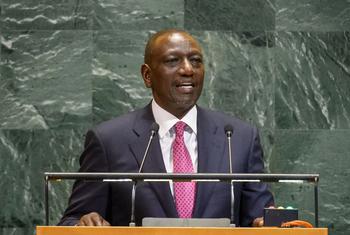
Kenyan President William Ruto delivered a powerful and unapologetic speech, directly confronting the global body’s outdated and unfair structure. His address was a bold call to action, centering on the long-standing issue of Africa’s exclusion from a permanent seat on the UN Security Council.
President Ruto’s remarks resonated deeply, echoing a continent-wide sentiment that the current global security architecture is both dysfunctional and undemocratic.
He didn’t mince words, describing the Security Council as “non-inclusive, unaccountable, autocratic, and opaque.” This is a crucial point, given that Africa, with its 54 nations and 1.4 billion people, is the only continent without permanent representation.
This glaring absence is even more striking when you consider that a significant portion of the Council’s agenda focuses on African conflicts, and African nations provide some of the largest peacekeeping contingents.
Africa bears the heaviest costs of global instability, yet it remains sidelined from the main table where critical decisions are made.President Ruto argued that reforming the Security Council is not a favor to Africa, but a necessity for the UN’s own survival.
He contended that if the UN is to remain a relevant and legitimate institution in the 21st century, it must reflect today’s geopolitical realities, not the post-World War II power arrangements of 1945.
Africa’s demand is clear: at least two permanent seats with full veto rights and two additional non-permanent seats.This is not a new position.
Africa has long articulated its unified stance through the Ezulwini Consensus, a common position adopted by the African Union. The consensus demands a fundamental change to the UN Security Council to rectify the “historical injustice” against the continent.
As President Ruto pointed out, African nations are already in the process of reforming the African Union (AU) to better serve their people and advocate for their interests on the global stage.
This internal reform, coupled with the external demand for UN reform, signals Africa’s determination to take its rightful place in global governance.
The speech has been lauded as a pivotal moment, forcing the international community to re-evaluate its commitment to multilateralism and fairness.
The pressure is now on the UN’s permanent members to act on their public support for reform and translate their words into meaningful, structural change.