By Tendai Keith Guvamombe
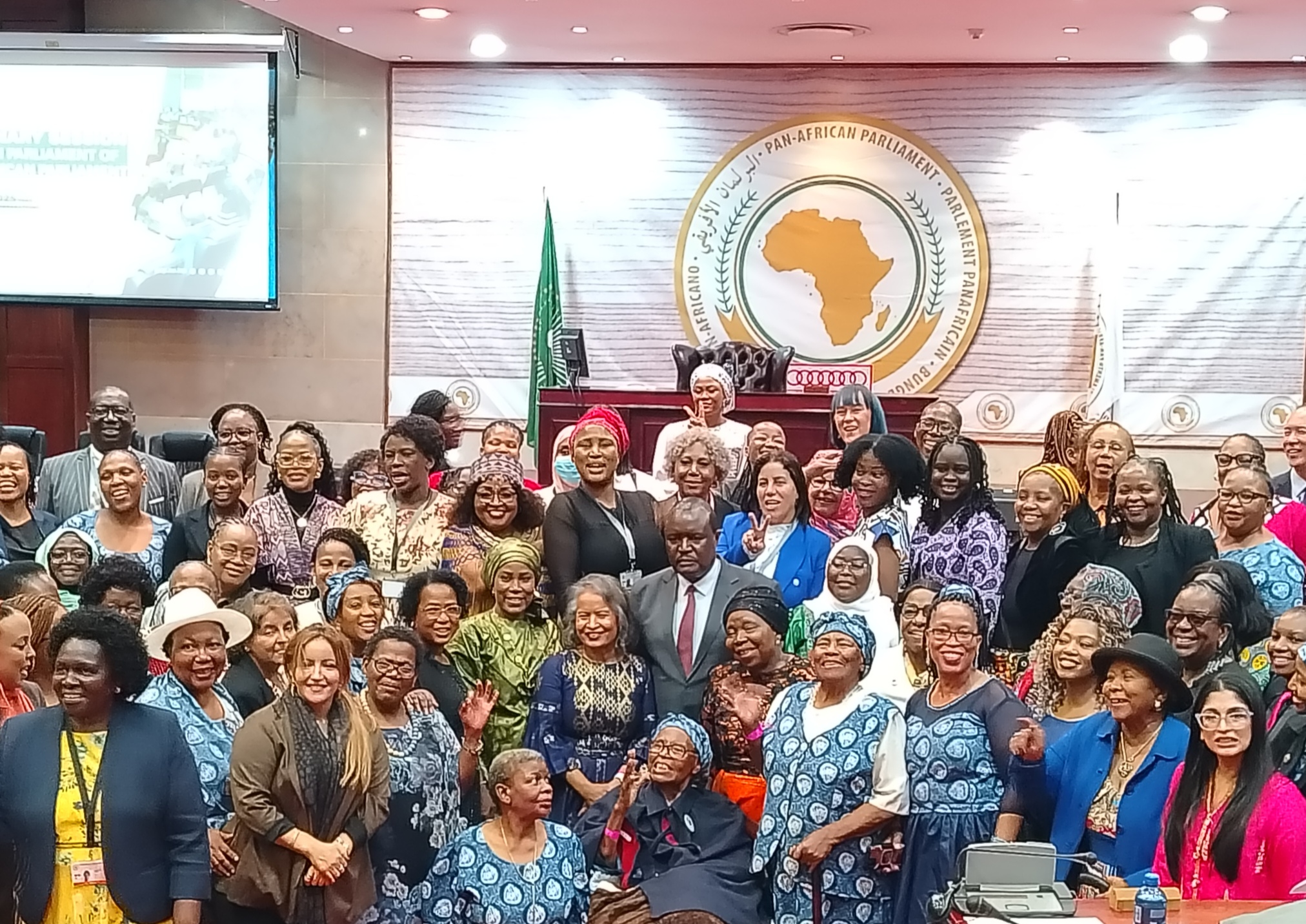
The Pan-African Parliament (PAP) on Thursday hosted a high-level conference, “Beijing +30: The Legacy, a Moment to reflect,” bringing together continental and global leaders to review three decades of progress since the landmark 1995 World Conference on Women.
The mood was one of tempered celebration, acknowledging legislative gains while issuing sharp calls for accelerated political empowerment. PAP President Chief Fortune Charumbira reaffirmed his commitment, stating, “Standing before you as a man, I give you assurance that as man we are together with you women because women’s rights are human rights.”
He underscored the strategic necessity of gender parity, noting that women constitute more than 50 percent of the population, and emphasized that empowering African women is essential to “building the Africa we want.
” While praising progress in legislation and institutions, Charumbira highlighted a critical failure point: women’s participation in politics remains at a meager 12 percent.
He urged African women to “learn to vote one another not just for men alone,” and affirmed the PAP’s role as an AU institution where women can advance their issues.
The historical significance of the review was championed by former PAP President H.E. Getrude Mongela, who described the 1995 Beijing Conference as “important and historic,” noting it has never been surpassed in terms of attendance.
Celebrating concrete victories, including increased focus on fighting gender-based violence and women’s empowerment, she expressed pride that Beijing agreements are now being implemented as government agendas, citing the re-election of a female President in Tanzania as a powerful example.
The UN Deputy Secretary-General Amin also celebrated the PAP’s recent legislative action, specifically mentioning the passing of the Model Law on Women and Gender as a “vital step.”
Amin acknowledged the barrier-breaking efforts of women across various spheres, noting that Africa has seen four women voted into power as Presidents since the 1995 conference.
Former Chairperson of the African Union Commission Nkosazana Dlamini Zuma provided a deep historical perspective on the Declaration’s transformative power.
Recalling her experience in Beijing, she noted that despite diverse national origins, the challenges faced by women were “merely the same.” Dlamini Zuma delivered a stark reminder that under apartheid, women were legally regarded as minors who could not make basic decisions like signing a document. “That’s when we learnt our rights as women. Women’s rights are human rights, we learnt this.”
She concluded that the Beijing Declaration became the blueprint for the elimination of all sorts of discrimination against women, emphasizing that the task now is to ensure the blueprint is fully executed across all AU Member States.