
Tendai Keith Guvamombe
A confidential 82-page dossier has been submitted to the International Criminal Court (ICC), formally accusing the government of Tanzanian President Samia Suluhu Hassan of orchestrating widespread and systematic crimes against humanity.
The document alleges the killing of thousands of citizens in what is described as the deadliest political crackdown in the country’s modern history.
Highest-Level Legal ChallengeFiled under Article 15(2) of the Rome Statute, the submission marks the highest-level legal step that can be taken against a sitting government.
It urges the ICC Prosecutor to open a formal investigation into the alleged state-engineered attack on civilians, immediately placing Tanzania and its leadership under the intense scrutiny of international criminal law.
This pivotal development shifts the crisis from a political debate to a formal global legal case with far-reaching diplomatic and political consequences.
Allegations of Mass AtrocitiesThe dossier details a terrifying list of alleged offences committed by state agents, including:
* Murder and Extermination.
* Torture.
* Enforced Disappearances.
Crucially, the document also highlights a coordinated internet blackout which was allegedly used as an inhumane act to conceal mass killings and systematic atrocities carried out against the civilian population.
President Directly Named
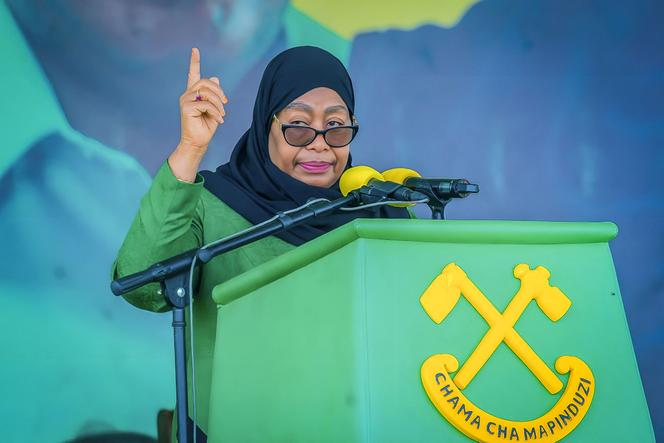
The submission is uniquely significant because it clearly and repeatedly names a sitting president, Samia Suluhu Hassan, as being responsible for the alleged crimes.
Few ICC filings ever directly name a head of state, making this one of the most serious international legal challenges Tanzania has ever faced.If the ICC Prosecutor decides to act on the filing and opens a formal investigation, the situation will escalate into a major global case.
This development will not only severely test President Hassan’s government but also have profound implications for human rights and political stability across the East African region.
The world awaits the ICC’s decision on whether it will proceed with a preliminary examination.