By Tendai Keith Guvamombe
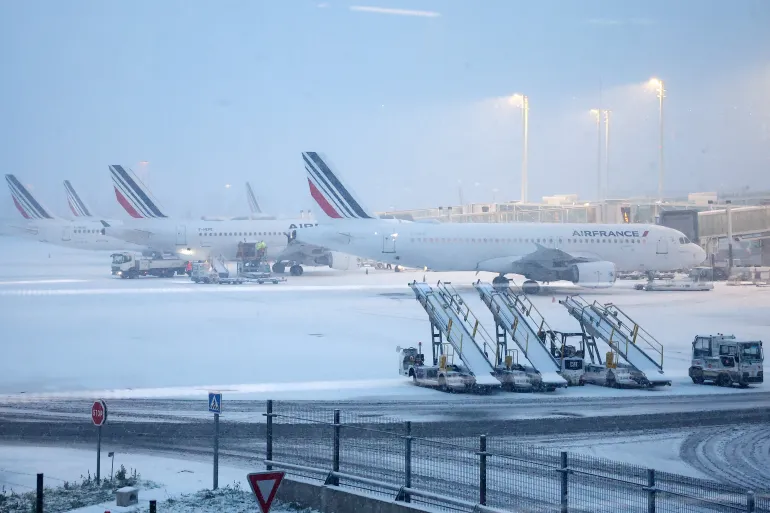
The global aviation industry is breathing a cautious sigh of relief as Air France officially resumed its flight services to Dubai this weekend. The move comes after a tense period of suspension triggered by rapidly escalating geopolitical friction in the Middle East, which had left thousands of travelers stranded and air corridors diverted.
The temporary halt in operations was not an isolated incident. It followed chilling statements from U.S. President Donald Trump, who recently announced that a massive force of American warships—which he described as an “armada”—is currently steaming toward the Gulf region.
This military posturing is seen as a direct response to the ongoing crackdown on protest movements within Iran, a situation that has kept the international community on high alert.
Safety First: Why KLM and Air France Paused Operations
Air France confirmed on Friday that it had “frozen” flights to specific high-risk destinations to ensure the highest level of safety for its passengers and crew. Its sister airline, KLM, took even more drastic measures, suspending flights to Tel Aviv, Dubai, Dammam, and Riyadh. Both carriers explicitly avoided the airspace of Iraq, Iran, and Israel, fearing that the presence of U.S. naval forces could lead to accidental escalations or missile exchanges.
The “armada” comment, made by Trump as he returned from the World Economic Forum in Davos, sent shockwaves through the diplomatic world. “We’re watching Iran,” Trump told reporters. “We have a lot of ships going that direction… just in case.”
A Volatile Region: The New Normal for Travelers
While the resumption of the Dubai route suggests a slight easing of immediate fears, the region remains a powder keg. Turkish Foreign Minister Hakan Fidan has already warned that Israel might be looking for an opportunity to strike Iran, adding another layer of complexity to an already fragile security situation.
For now, Air France and other major carriers are monitoring developments “minute by minute.” Travelers are advised to stay in close contact with their airlines, as flight paths in 2026 continue to be dictated by the volatile relationship between Washington and Tehran.