By Tendai Keith Guvamombe
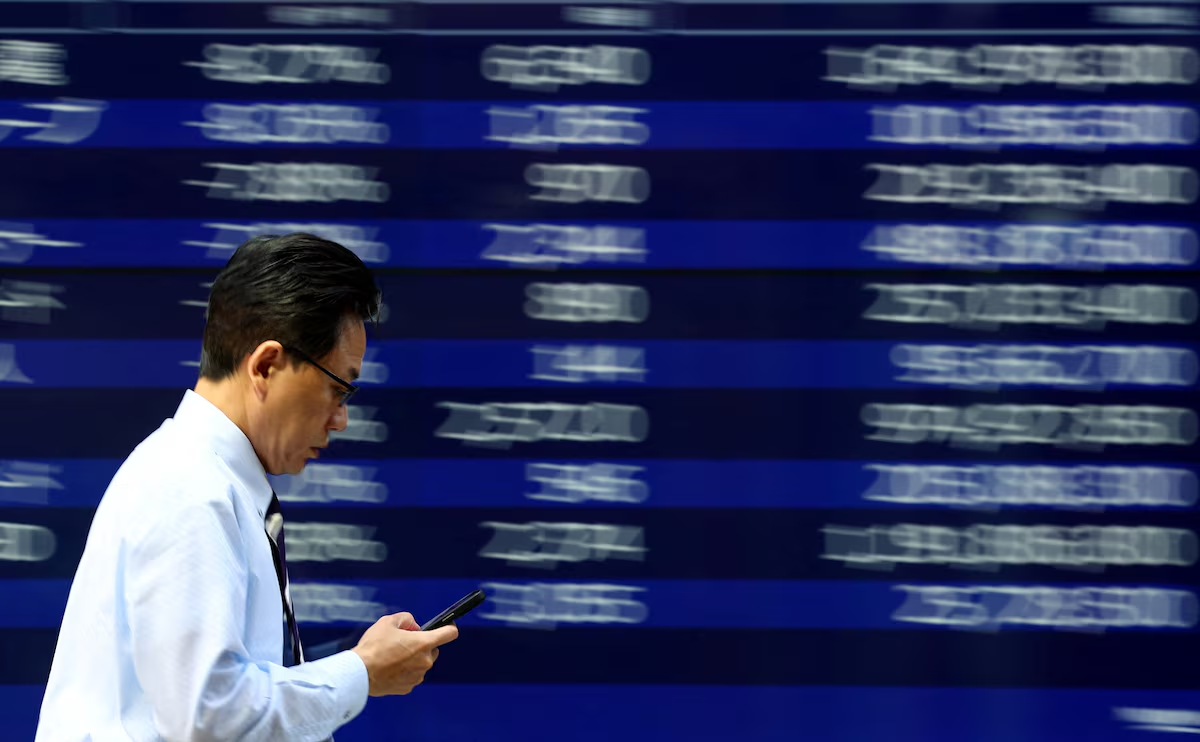
TOKYO/SEOUL – Asian equity markets surged to historic levels on Tuesday, January 27, 2026, as investor enthusiasm for the global artificial intelligence boom and robust corporate earnings successfully neutralized a sudden trade-policy shock from Washington.
The MSCI Asia Pacific Index climbed as much as 0.7%, reaching an all-time high, even as President Donald Trump sent ripples through the currency and automotive sectors with a new 25% tariff mandate on South Korean imports.
The rally was spearheaded by a massive recovery in the KOSPI, which reversed an initial 1% plunge to close up 2.73%—its sharpest daily gain in three weeks.
Investors appeared to treat Trump’s latest decree as “tactical theater” rather than a permanent economic barrier.
The President’s move, which targets South Korean autos, lumber, and pharmaceuticals, was attributed to the Korean legislature’s delay in codifying a trade agreement reached last year. While automakers like Hyundai and Kia saw modest losses, they were dwarfed by a tidal wave of buying in the semiconductor space.
The AI Shield: Samsung and SK Hynix Soar
The “shield” protecting Asian markets remains the insatiable global demand for AI-capable hardware. SK Hynix, the world’s leading provider of high-bandwidth memory, saw its shares soar 8.7% to a record high, while Samsung Electronics jumped nearly 5%.
Analysts noted that these tech giants are currently seen as more vital to global supply chains than the political friction generated by trade disputes.
The optimism in Asia was further bolstered by a spillover effect from Wall Street, where the S&P 500 and Nasdaq have hit consecutive highs in anticipation of earnings from the “Magnificent Seven,” including Microsoft and Apple. Investors are betting that the revenue growth from these tech behemoths will continue to justify record valuations, regardless of regional tariff shifts.
Currency Volatility and Safe Havens
While stocks pushed higher, the currency and commodity markets told a more cautious story. The South Korean won faced downward pressure, trading near 1,448 per dollar, as traders weighed the potential long-term impact on Seoul’s export-reliant economy. Meanwhile, uncertainty over the “America First” trade agenda drove a flight to safety; gold prices hovered near $5,080 an ounce, while silver surged over 6% to $110.60.
This divergence suggests that while retail and institutional equity traders are “buying the dip” on political noise, macro-investors are hedging against a potential cycle of trade disruptions throughout 2026. For now, however, the Asian market’s message is clear: earnings and innovation currently hold more weight than the threat of a trade war.