
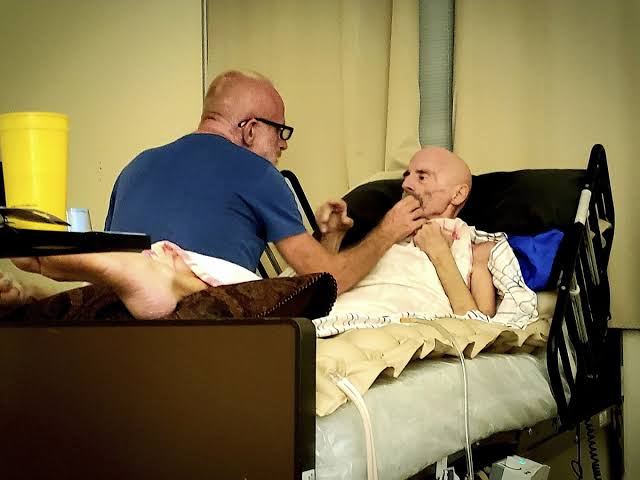
From Kinshasa to the World: The First Recorded Faces of the HIV Epidemic
By Drone Ideal
Long before the medical world gave the virus a name in 1983, HIV was already silently claiming lives across continents. Because the virus was only identified decades after it began to spread, the “first” people to test positive were not diagnosed in real-time.
Instead, they were identified through medical “time travel,” as scientists used modern technology to test preserved blood and tissue samples from the mid-20th century.
The earliest verified person to test positive for HIV-1 was an unidentified man from Kinshasa, in the Democratic Republic of Congo. In 1959, his blood was drawn for a minor medical study and subsequently frozen.
When researchers re-examined the sample in the late 1980s using advanced genetic sequencing, they were stunned to find the virus. This remains the oldest physical evidence of HIV in a human, proving that the virus had already crossed the species barrier from primates to humans in Central Africa by the late 1950s.
While the Kinshasa case marks the biological beginning, the story in the United States traces back to a teenager named Robert Rayford. In 1969, the 16-year-old from Missouri passed away from a mysterious illness that left his doctors completely baffled. Recognizing the anomaly, medical staff preserved his tissue.
It wasn’t until 1988 that molecular testing confirmed Rayford was the first known fatality of HIV-1 in the U.S., likely infected as early as 1966.
The history of the virus also includes “Senhor José,” a Portuguese man who died in the 1970s and was later confirmed as the first known case of the HIV-2 strain, likely contracted in Guinea-Bissau in 1966.
In contrast, Ken Horne became the first person in the U.S. to be clinically documented by the CDC in 1980 for symptoms that would eventually define the AIDS epidemic. Together, these individuals represent the earliest chapters of a global health crisis that science is still working to fully resolve.