Eco-Luxury Unveiled: Why St Tropez is the Crown Jewel of Zimbabwe’s Forbes-Rated Tourism Sector?
By Tendai Keith Guvamombe
In the competitive landscape of African hospitality, where South Africa’s Sandton, Fourways, and Waterfall City have long established the benchmark for urban opulence, a new contender has emerged to redefine the sector: St Tropez Luxurious Apartment Hotel.
Nestled just moments outside Harare’s Central Business District, St Tropez is not merely a residence; it is a groundbreaking fusion of cultural heritage tourism and sustainable development. It arrives as a visionary extension of the luxury lifestyle pioneered by Waterfall City’s Waterfall Mansions in Midrand or the Michelangelo Apartments in Sandton, mirroring the vertical extravagance of Dubai’s Burj Khalifa Residences and Jumeirah Living.
As the only luxury serviced apartment in Southern Africa to bear a French name, St Tropez distinguishes itself through a specialized focus on the guest experience through global immersion.
St Tropez Luxury Apartment Hotel
While the Saxon Hotel in Johannesburg is renowned for its bespoke service and the Silo Hotel in Cape Town for its architectural adaptive reuse, St Tropez pivots toward a unique multicultural immersion.
Each unit serves as a niche tourism portal. Entering a French suite evokes the tangible heritage of the Napoleonic era, while the German-themed rooms provide a flashback to the Bismarckian epoch.
With authentic FF&E (Furniture, Fixtures, and Equipment), the Chinese and Scottish suites offer an unparalleled experiential travel journey that rivals the thematic depth of international boutique hotels like The Address JBR in Dubai or Melrose Arch in Johannesburg.
This “hotel-within-an-apartment” concept perfectly aligns with Zimbabwe’s recent coronation by Forbes Magazine as the #1 must-visit destination for 2025.
The property’s infrastructure is a marvel of Sustainable Tourism, integrating solar-powered energy systems and private resource management to ensure a low carbon footprint.
This commitment to regenerative hospitality was recently validated when St Tropez hosted Dr. Victor Nani, the Head Coach of Team Kenya, and his 70 delegates during the Africa Youth Chess Championship.
Reflecting on the stay, Dr. Nani remarked:
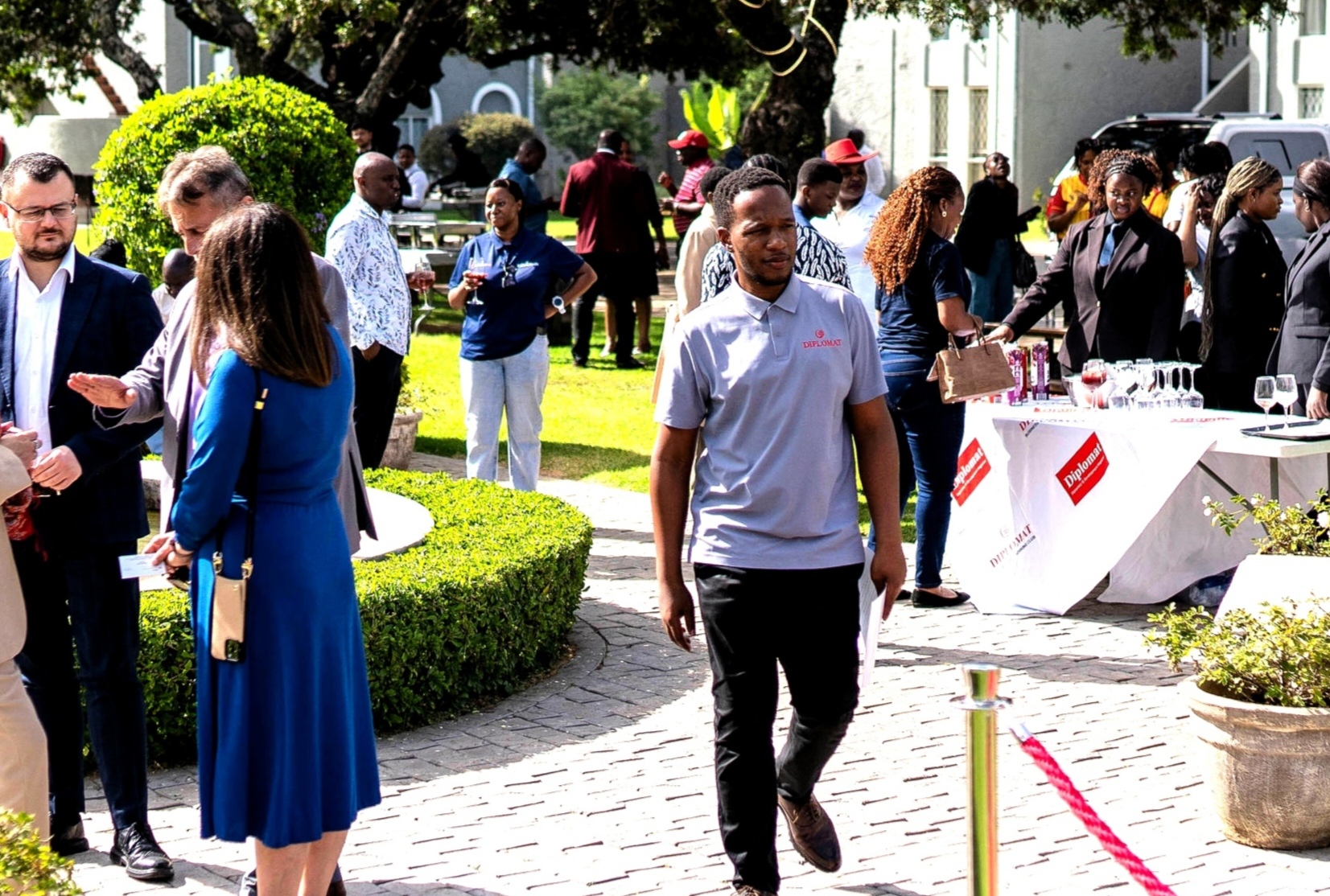
Diplomats Networking
“This place is honestly a luxury place. What struck me is that the rooms are actually unique. They actually live up to the name of a luxury hotel. Their apartments are absolutely beautiful. The beds are kingsley and the grass is well manicured. I think we see this in Europe and sometimes in America. The gentleman who was in charge of the whole place is actually pleasant and very tolerant. If people are warm it tells you something about the place. The meals here are way better than the meals we had elsewhere. The meals have been awesome.”
Dr. Nani National Coach Kenya Chess
Beyond sports tourism, St Tropez has become a hub for Diplomatic and MICE (Meetings, Incentives, Conferences, and Exhibitions) tourism. It recently held a high-profile Diplomats Reception, allowing the international community to appreciate its “neat level of hospitality.”
Furthermore, the facility served as the strategic base for the SADC Secretariat Crew during the 44th SADC Heads of State Summit. By blending high Average Daily Rate (ADR) value with biophilic design adjacent to the Chapman Golf Club, St Tropez is setting a new precedent for ultra-luxury in Africa, proving that Zimbabwe is not just participating in the global luxury market—it is leading it.
On June 2, ExxonMobil and NBA Africa (www.Africa.NBA.com) held an interactive STEM Showcase and a Jr. NBA clinic for 100 boys and girls ages 16 and under at the Instituto Politécnico Industrial de Luanda (IPIL) as part of the ongoing third season of the ExxonMobil Jr. NBA League in Angola.
An announcement by the Electoral Commission of South Africa (IEC) expressing readiness to roll out the next municipal ballot between November 2 this year and January 31 next year was met with projections by analysts on what period would be optimal to increase voter turnout. The argument advanced by analysts in Business Day that a November political campaign period would boost voter turnout is intuitively appealing. Avoid the December shutdown, escape January fatigue, and voters will show up. It suggests there can be a neat administrative fix to a deeply political problem.
Its operations include major gold mines such as Freda Rebecca Gold Mine, How Mine, Shamva Gold Mine, Jena Gold Mine and Elvington Gold Mine; are assets that collectively span thousands of hectares and produce gold in volumes measured not in grams but in hundreds of kilogrammes per month and tonnes per year.