Robert Mugabe Day: Remembering a Revolutionary, Reckoning with a Ruler
By Nyasha McBride Mpani (Guest Writer)
21 February, commemorated in Zimbabwe as Robert Mugabe Day and officially marked as National Youth Day, invites reflection, not only celebration. It is a day that stirs strong emotions, depending on where one stands in Zimbabwe’s complex political history.
Reading Sue Onslow and Martin Plaut’s biography of Robert Mugabe offers a timely lens through which to revisit his legacy. The structure of the book itself tells a story, from “Controversial and Divisive Leader” to “Birth of the Revolutionary,” from “Freedom Fighter to President of a One Party State,” and eventually to “Why It All Turned Sour.” The chapter titles trace a trajectory that mirrors Zimbabwe’s own post independence journey, hopeful, turbulent, and ultimately fraught.
Mugabe was once widely admired as an Afro nationalist intellectual who stood firmly against white minority rule. For many across Africa and beyond, he embodied resistance and the promise of majority rule. At independence in 1980, Zimbabwe was filled with optimism. Reconciliation was preached. Education and healthcare expanded. The dream of a multiracial Zimbabwe seemed within reach.
Yet the biography also confronts the harder truths. The evolution from liberation leader to political survivalist did not happen overnight. The consolidation of power, the push toward a de facto one party state, the suppression of dissent, and the economic turmoil that followed land reform policies reshaped both his image and the nation’s trajectory. The Look East policy symbolized a shift in alliances as relations with the West deteriorated. Succession battles and internal party struggles revealed a leader increasingly preoccupied with control.
Now, nearly a decade after Mugabe left office, another question demands honest engagement. Did his removal lead to a radical shift in government policy, or was it largely a change in personalities rather than direction? Many had expected a new political and economic dispensation, one that would reset relations with the international community, revive the economy, and deepen democratic reforms. While some adjustments have occurred, the broader structural and governance questions remain open to debate. The promise of transformation has often felt more incremental than radical.
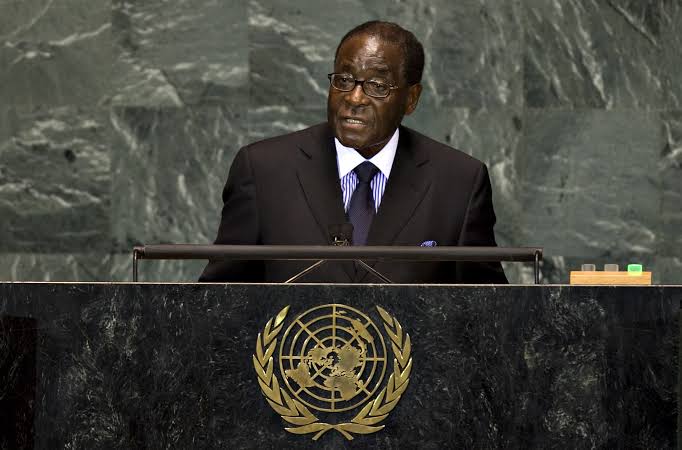
At the same time, history has a way of reframing absence. In today’s shifting geopolitical landscape, marked by renewed global power competition, contested narratives of sovereignty, and evolving alliances, some argue that Mugabe’s voice is missed. Whatever one thinks of his domestic record, he was an unapologetic and forceful African voice on the global stage. He spoke assertively about land, sovereignty, and Western intervention. In a period where Africa is again navigating complex pressures from major powers, there has arguably been no single towering figure who commands that same defiant continental presence.
This does not erase the controversies of his rule, nor does it romanticize the hardships many endured. Rather, it acknowledges that leadership operates on multiple levels, domestic governance and international symbolism. Mugabe’s absence has created space for reflection about both.
National Youth Day presents a particular irony and responsibility. Zimbabwe’s youth inherit both the gains of independence and the burdens of economic and political challenges. Reflecting on Mugabe’s life should not mean uncritical reverence nor wholesale dismissal. It should mean serious engagement with the lessons of leadership, how liberation movements transition into governing institutions, how power reshapes ideals, and whether leadership change alone is enough to alter the course of a nation.
As Zimbabwe marks Robert Mugabe Day, perhaps the most meaningful tribute is honest reflection. Mugabe was complex, brilliant, strategic, divisive, and enduring. For nearly four decades, his personality and political instincts shaped Zimbabwe’s national identity.
A decade on, the questions remain. And perhaps that, more than certainty, is what defines his continuing presence in Zimbabwe’s political conversation
Nyasha McBride Mpani is the Project leader for the data for governance alliance project based at the institute of justice and reconciliation in Cape Town