
By Ruth Mpala
For many travelers and traders moving between South Africa and Zimbabwe, the Beitbridge Border Post is a daunting bottleneck of red tape, long queues, and expensive customs duties. In the gaps where the law ends and desperation begins, a unique informal industry has emerged. They are known as the Zalawi.
The name itself is a colloquial nod to the massive “Zalawi” haulage trucks that crisscross the SADC region. Much like their mechanical namesakes, these men and women are the heavy lifters of the border—but instead of highways and engines, they rely on muscle, grit, and the cover of night.
The Economic Drivers: Duty and Documentation
The Zalawi provide a service born out of economic necessity. Many Zimbabweans working in South Africa purchase large quantities of groceries, appliances, and building materials to send home. However, two major hurdles often stand in their way:
- Customs Duty: The cost of legally importing goods can sometimes equal the value of the items themselves.
- Immigration Status: Many travelers lack the necessary permits to pass through official channels without risking deportation.
By hiring a Zalawi, a person can bypass the official gate, hoping to see their hard-earned goods reach the Zimbabwean side for a fraction of the legal cost.
A “Do or Die” Crossing
The journey of a Zalawi is not a simple walk; it is a high-stakes gamble. Operating along the banks of the Limpopo River, they face a gauntlet of physical and legal threats.
- The Border Fence: A formidable barrier designed to stop movement, which the Zalawi must navigate or bypass through damaged sections.
- Law Enforcement: The South African Police Service (SAPS) and the South African National Defence Force (SANDF) conduct regular patrols. Getting caught often means the seizure of goods and immediate arrest.
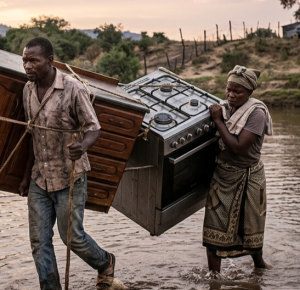
- The Limpopo River: During the rainy season, the river becomes a deadly torrent. Even when shallow, the risk of crocodiles and hippos is a constant reality.
- Criminal Gangs: Known locally as Guma Guma, these predatory gangs often hide in the bush to rob both the Zalawi and the clients they are assisting.
The Human Element
Despite the nickname being derived from massive trucks, the Zalawi are individuals—mothers, fathers, and young men—who view this “illegal” work as their only means of survival. The physical toll is immense; they carry refrigerators, wardrobes, and sacks of grain on their backs through rugged terrain where no vehicle can go.
For the Zalawi, every successful trip is a victory against a system that has largely left them behind. For the clients, it is a desperate attempt to provide for their families back home.
The Bottom Line
While authorities view the Zalawi as a security breach and a loss of tax revenue, they remain a vital, albeit invisible, artery of the regional economy. As long as the economic disparity remains high and the cost of legal crossing stays prohibitive, the shadow of the Zalawi will continue to move across the Limpopo, carrying the weight of a nation’s necessities on its shoulders.