By Tendai Keith Guvamombe
In May 2026, a peculiar trend has hardened into a global political norm: the Un-Resignation. Across the world, leaders who would have historically been forced into early retirement by scandal or electoral defeat are instead choosing to double down. From the Union Buildings in Pretoria to 10 Downing Street, the podium has become a fortress rather than a place of accountability.
The Constitutional Fortress: Cyril Ramaphosa
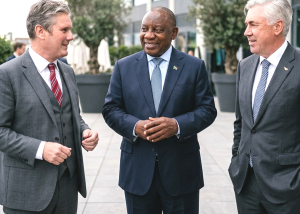
In South Africa, President Cyril Ramaphosa faces a familiar storm. Despite a Constitutional Court ruling on May 12 regarding the long-standing Phala Phala scandal, Ramaphosa’s stance has evolved from cautious silence to outright defiance. Addressing the nation, he signaled that he would not be hurried out of office by political rivals or public outcry.
“I respectfully want to make it clear that I will not resign,” Ramaphosa stated during a high-stakes press conference. “To do so would be to pre-empt the constitutional order. We are implementing reforms, and I intend to see them through.”
By framing his refusal as a defense of constitutional principles rather than personal survival, Ramaphosa has successfully paralyzed his opposition, turning a moment of extreme vulnerability into a test of institutional endurance.
The Cabinet Siege: Keir Starmer
Meanwhile, in London, Prime Minister Keir Starmer is navigating his own May Siege. Following a string of local election losses that saw several junior ministers resign in protest, Starmer used a Cabinet meeting on May 12 to effectively dare his critics to launch a formal challenge.
Instead of offering a timetable for his departure, Starmer remained immovable. “The country expects us to get on with governing,” he told his ministers. “I take responsibility for the election results, and I take responsibility for delivering the change we promised.” By refusing to engage in resignation talk, Starmer is betting that his party’s internal mechanics will protect him longer than public opinion will.
The Sporting Stoic: Carlo Ancelotti
The culture of refusal extends even to the sacking culture of elite sports. At Real Madrid, Carlo Ancelotti has spent the month batting away questions about his future following a trophyless season. While managers are usually the first to fall, Ancelotti’s pedigree allows him a level of defiance rarely seen.
“The future is the next game,” Ancelotti told reporters this week. “I have a contract and I am happy. I don’t have to talk about my future because it is already written in my work.”
A New Doctrine of Power
Whether it is the President of Georgia, Salome Zourabichvili, who recently vowed to remain in office despite a disputed successor, or Western Prime Ministers, the strategy is the same: Stay at the podium. In the modern era, as long as a leader refuses to say the words I resign, they remain the central figure in the narrative, forcing the world to move at their pace.