By Caroline Washaya-Moyo
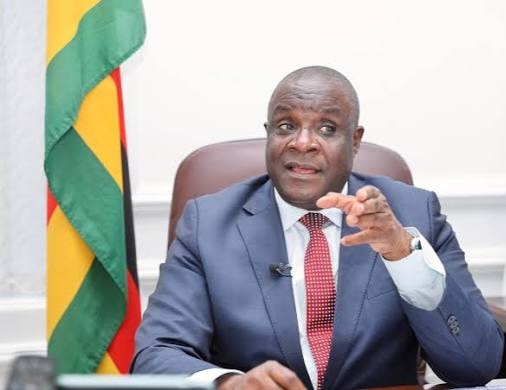
Deputy Chief Secretary to the President and Cabinet, Mr George Charamba, has reignited debate over the funding and sustainability of journalism, arguing that the media should be recognised as a public good that deserves public support.
Charamba, writing on his X account, said journalism is fundamentally a public service and questioned the continued resistance to State support for the media, particularly in Zimbabwe where many publications depend on advertising and sales to sustain operations.
His intervention comes amid wider discussions about the financial pressures confronting the media industry, including declining revenues, shrinking advertising markets and the sustainability of independent news organisations.
Charamba argued that public funding of journalism was not unique to Zimbabwe, pointing to support mechanisms used in other jurisdictions, including direct State funding, tax concessions and targeted assistance to smaller publications.
He cited Nordic countries as examples of systems where support can be directed towards smaller and struggling publications in an effort to maintain plurality of voices.
“The one thing you are taught in Journalism 101 is that it is a public service, indeed a public good,” Charamba wrote.
He also questioned what he described as the contradiction of rejecting State support while accepting funding from foreign governments channelled through non-governmental organisations and other institutions.
Charamba said such funding arrangements should also be examined within the broader political economy of the communications industry, arguing that external funding could not automatically be equated with media independence.
The senior Government official also revisited the establishment of the Institute for Media Policy and Information (IMPI) during the tenure of former Information Minister Professor Jonathan Moyo.
According to Charamba, the initiative involved journalists and other stakeholders and produced what he described as a seminal report examining expectations surrounding media products in Zimbabwe.
He said the report had subsequently remained unused.
Challenging the private-government media binary
Charamba further criticised the long-standing description of Zimbabwe’s media landscape in terms of “private media” and “Government media”, arguing that the distinction had contributed to a polarised media environment.
He questioned why privately owned media organisations that have historically accepted State advertising would simultaneously reject the principle of State support for journalism.
“Not once did any of the so-called private media turn down advertorials from the State,” he wrote, adding that State advertising represents a significant component of media revenues in many jurisdictions.
He also pointed to the sale of media products to the public as another reason why journalism has a wider public dimension than a conventional private commercial enterprise.
Charamba cited the recent donation of two vehicles by the Office of the President and Cabinet to two broadcasters working on the liberation struggle beat, saying the gesture had also generated debate over State support for journalists.
The Deputy Chief Secretary’s remarks come as Zimbabwe continues to grapple with questions around media sustainability, professional independence, ownership, funding and access to information.
A debate beyond funding
At the heart of Charamba’s argument is the question of whether journalism should be treated purely as a commercial product or also as an institution serving a wider public interest.
Public funding of journalism can take different forms, including direct grants, tax incentives, public advertising and support targeted at smaller publications. Such mechanisms, however, also raise questions about safeguards needed to protect editorial independence and prevent funding from becoming a means of influencing news coverage.
Charamba’s intervention calls for Zimbabwe to broaden the conversation beyond the traditional State-versus-private media divide and examine how sustainable journalism can be financed while maintaining plurality and public trust.
He concluded his post by welcoming what he sees as a growing recognition within Zimbabwe’s media sector that journalism can legitimately be treated as a public good.
“Welcome to the real world, Comrades!!!” he wrote.