By Caroline Washaya Moyo (Harare)
HARARE, Zimbabwe – A €20 million initiative funded by Spain is targeting unemployment among Africa’s women and young people by providing business training, financial support and incubation services to help enterprises grow, create jobs and access regional markets.
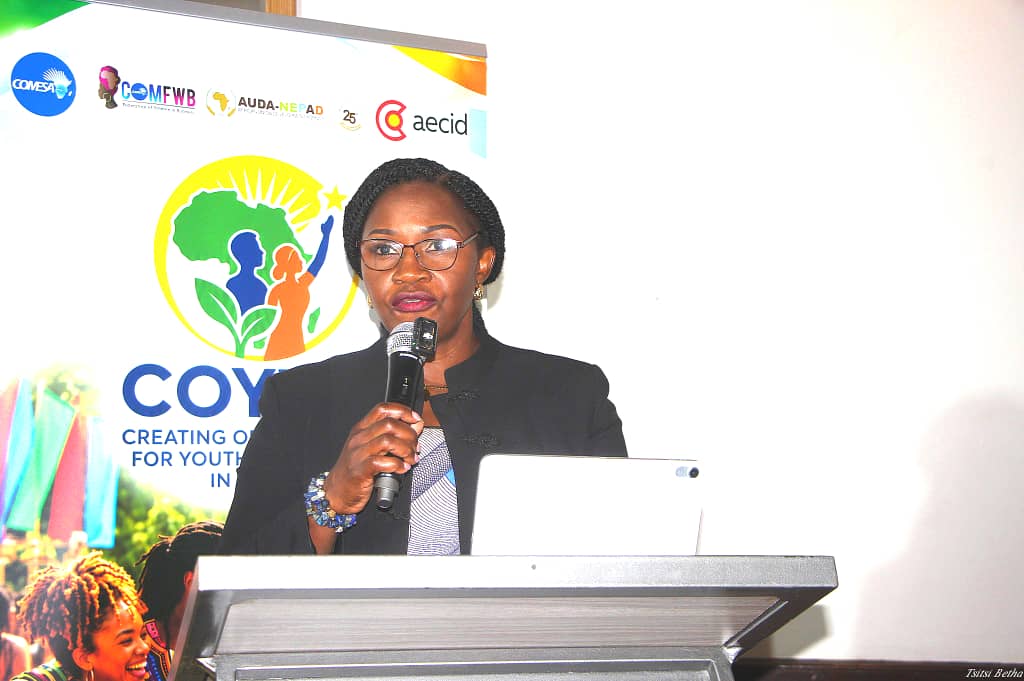
The Creating Opportunities for Youth and Women in Africa (COYWA) programme, implemented by the African Union Development Agency (AUDA-NEPAD), was the focus of a regional launch held on Tuesday, 20 October 2026, on the sidelines of the 19th COMESA Business Forum in Harare.
The initiative seeks to help aspiring and emerging entrepreneurs overcome barriers to finance, technology, business development services and markets, which often prevent small businesses from surviving and expanding.
Delivering the keynote address, AUDA-NEPAD Principal Programme Officer Daphine Muzawazi said women and young people must be recognised as key drivers of Africa’s economic transformation rather than merely beneficiaries of development assistance.
“At the end of the day, we are creating job creators,” Muzawazi said, emphasising the need to equip entrepreneurs to generate employment and contribute to economic growth.
“Our objective is not simply to support the creation of more enterprises, but to enable more enterprises to survive, grow, create decent jobs and compete effectively in regional and continental markets,” she said.
Spain commits €20 million to programme
The initiative is funded by the Government of Spain through the Spanish Agency for International Development Cooperation (AECID), which allocated €20 million to AUDA-NEPAD for COYWA.
Muzawazi said Spain’s broader support to the African Union amounts to approximately €70 million, reflecting continued cooperation in promoting inclusive development across the continent.
COYWA builds on the NEPAD Spanish Fund, which operated from 2007 until its closure in 2022. The fund supported regional economic communities, including the Common Market for Eastern and Southern Africa (COMESA) and the Economic Community of West African States (ECOWAS), through programmes such as the Business Incubator for African Women Entrepreneurs.
While the previous fund focused largely on gender equality, COYWA places greater emphasis on economic empowerment, employment creation and helping businesses expand.
An agreement with AECID was signed in 2023 for a five-year programme, extending its reach from two regional economic communities to five. These include COMESA, ECOWAS, the Economic Community of Central African States (ECCAS), the Southern African Development Community (SADC) and another participating regional community.
Three pillars support business development
COYWA is structured around three pillars addressing the financial, technical and social barriers facing women and young entrepreneurs.
The first focuses on digital and financial literacy, equipping business owners with practical skills to manage their enterprises, use technology and navigate financial systems.
The inaugural training programme, conducted in 2025, reached 48 young entrepreneurs from approximately 25 African countries. A second round targeting about 65 participants is planned for the end of 2026, with further regional training expected in early 2027.
The second pillar provides grants to civil society organisations and non-governmental organisations supporting women and young entrepreneurs. Their work addresses structural barriers, including gender-based violence, limited access to sexual and reproductive health services, and difficulties accessing technology and markets.
Muzawazi said the first round of grants was being finalised following a rigorous selection process, with another call for applications expected around the end of 2027.
The third pillar supports the establishment and expansion of business incubators, offering entrepreneurs assistance with business management, innovation, product development and growth.
In the COMESA region, the component is being delivered through COMESA and the COMESA Federation of Women in Business (COMFWB), with approximately €950,000 allocated to each participating region for incubation, innovation, management training and related support.
The approach combines skills development and institutional assistance to help businesses strengthen their operations and respond to market demands.
AfCFTA offers opportunities for regional expansion
The initiative comes as African countries seek to deepen economic integration through the African Continental Free Trade Area (AfCFTA), which aims to increase intra-African trade and expand opportunities for businesses to reach new markets.
Muzawazi said women and young entrepreneurs needed to be equipped to participate in regional value chains if the continent was to realise the full benefits of economic integration.
“The promise of the AfCFTA will only be fully realised when women and young entrepreneurs are equipped to participate meaningfully in regional value chains, access larger markets and benefit from the opportunities of African economic integration,” she said.
For small businesses, the expanded market offers opportunities to secure cross-border customers, establish commercial partnerships and supply industries across the continent.
However, entrepreneurs must be able to meet market standards, access affordable finance and adopt appropriate technologies to compete beyond their domestic markets.
COYWA’s training and incubation support is intended to strengthen these capabilities, particularly among businesses that lack the resources and networks needed to expand.
Bridging the gap between skills and employment
Muzawazi also highlighted the mismatch between the skills produced by education systems and those demanded by labour markets, noting that many young Africans are increasingly turning their talents into business ventures.
She said the programme was designed to extend opportunities beyond formal employment by providing the knowledge, services and networks needed to establish viable enterprises.
COYWA aligns with the African Union’s Agenda 2063, which promotes inclusive growth and sustainable development, with women and young people playing a central role in the continent’s transformation.
AUDA-NEPAD is also exploring ways to adapt its interventions to emerging technologies, including artificial intelligence, as businesses respond to changing market conditions.
Muzawazi said the programme’s ambitions extended beyond its initial five-year implementation period, underscoring the importance of sustained cooperation among governments, regional institutions, development partners, the private sector and civil society.
For the COMESA region, the key measure of success will be whether the initiative translates its financial and technical support into stronger businesses, sustainable jobs and greater participation by women and young people in regional trade.
As African countries pursue deeper economic integration, COYWA seeks to ensure that smaller enterprises are better positioned to contribute to productive activity and benefit from opportunities across the continent.