
Tendai Keith Guvamombe
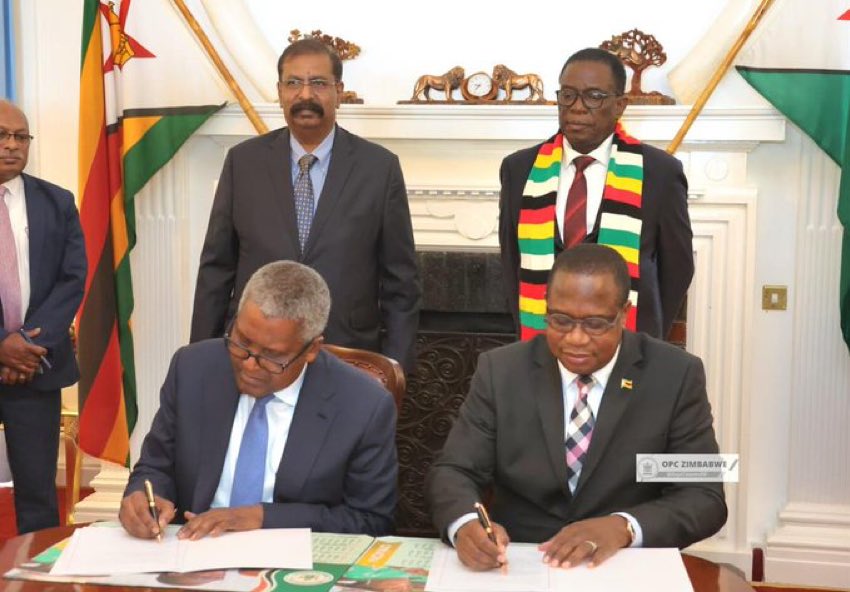
The scheduled US$1 billion investment by Nigerian billionaire Aliko Dangote into a vertically integrated industrial complex in Zimbabwe is far more than simple foreign direct investment.
It represents a powerful, tangible acceleration of the very principles underpinning the African Continental Free Trade Area (AfCFTA), directly supporting the goals championed by the Pan-African Parliament (PAP) in delivering SDGs 2030 and AU Agenda 2063.
The core challenge to the AfCFTA, as repeatedly highlighted by PAP President H.E. Chief Fortune Zephania Charumbira and dedicated PAP MPs, is the continent’s low manufacturing base and weak intra-African value chains .
Chief Charumbira has consistently urged national parliaments to ratify and domesticate AfCFTA instruments, calling for governments to ensure a significant portion of procurement comes from within Africa to foster self-reliance.
Dangote’s multi-sector investment (cement production, coal mining, and power generation) in landlocked Zimbabwe creates a regional manufacturing hub for essential construction materials.
This enables import substitution across Southern Africa and lowers the cost of major infrastructural projects—roads, high-speed rail, ports—that are vital for the free movement of goods championed by the AU’s Agenda 2063. The project’s success is a testament to the potential of African private-sector leadership driving continental integration.
This kind of cross-border investment is not isolated. Other successful local integration efforts include:
- The East African Community (EAC), which has a functioning customs union and common market, demonstrating high levels of trade integration by removing non-tariff barriers (NTBs).
- The Southern African Customs Union (SACU), which is the oldest customs union in the world and continues to facilitate the cross-border movement of goods and equitable sharing of revenue among its five members.
- The expansion of major African banks, such as Ecobank and Standard Bank, across multiple African countries, facilitating regional financial integration necessary for trade finance.
In essence, Dangote’s move from Nigeria to Zimbabwe uses private capital to build the physical bridge required for the AfCFTA to succeed. - It transforms a national economic decision into a continental integration strategy, affirming the PAP President’s call for national parliaments to establish policy frameworks that actively support the AfCFTA and the vision of a prosperous, integrated Africa.