By Caroline Washaya-Moyo
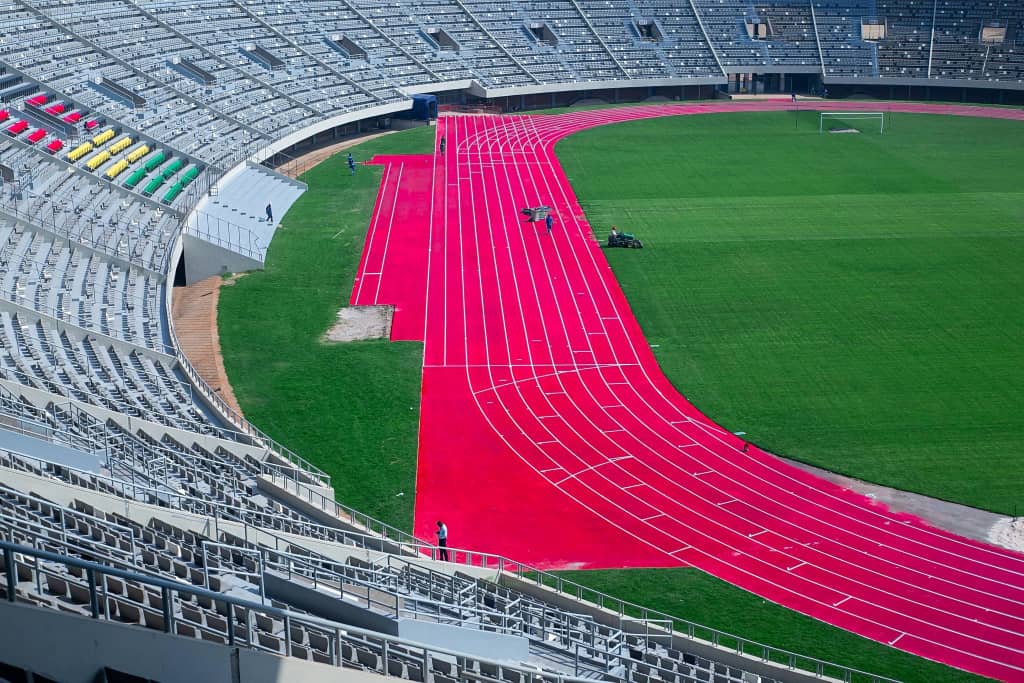
The return of international football to the National Sports Stadium is opening a new chapter in Zimbabwe’s efforts to position sport as a driver of tourism, investment, employment and local economic development.
Permanent Secretary in the Ministry of Sport, Recreation, Arts and Culture, Mr N. Moyo, said the National Sports Stadium is ready to host the next international football match on 28 September 2026, when the Zimbabwe Warriors return to their home ground.
In a statement issued in Harare on Monday, Mr Moyo said the return of international football followed an extensive rehabilitation and upgrading programme aimed at restoring the National Sports Stadium as a modern facility capable of hosting major domestic, continental and international sporting events.
The development carries significance beyond football, particularly for Zimbabwe’s growing sports tourism ambitions.
Major international sporting fixtures can attract visiting supporters, teams, officials, media personnel, sponsors and other visitors, creating economic opportunities across accommodation, transport, restaurants, entertainment, retail and other tourism-related services.
Mr Moyo said the Ministry, as owner and custodian of the National Sports Stadium, had taken overall responsibility for ensuring that the facility was not only physically rehabilitated, but was also operationally ready to support major sporting events.
The Ministry’s responsibility covers infrastructure, technical systems, safety and security arrangements, utilities, access control, spectator services, media and production facilities, the playing surface and the overall match-day environment.
The rehabilitation and reopening programme has been undertaken through continued engagement with the Confederation of African Football (CAF), whose technical engagement has provided an important framework for assessing the facility against applicable international football requirements.
Mr Moyo said the Ministry’s approach was based on continuous engagement, monitoring, testing and improvement, noting that international-standard facilities need to be consistently maintained and operated at the required standard.
A key component of the preparations has been the decision to test the upgraded stadium under actual match conditions.
The CAF Champions League match held on 6 September 2026 provided an important opportunity to assess the facility in a continental football environment.
The fixture enabled the Ministry and its operational partners to assess stadium access, security, spectator management, movement of teams and officials, media operations and general match-day coordination.
The process was further strengthened by the Premier Soccer League match between Scottland FC and Agama FC, which was played as an evening fixture.
According to Mr Moyo, the evening match was particularly significant because it provided a live environment in which the Ministry could assess critical stadium systems under night-time conditions, including power and lighting, safety and security, access control, production, media and entertainment systems.
The practical tests have helped move the National Sports Stadium from a phase focused primarily on rehabilitation and infrastructure upgrading into one centred on operational readiness, systems integration and continuous improvement.
Mr Moyo said lessons arising from the recent matches were being incorporated into preparations for the forthcoming international fixture, with the Ministry continuing to undertake inspections, testing, maintenance and final operational checks.
Sports tourism opportunity
The return of international football presents an opportunity for Zimbabwe to strengthen its sports tourism offering and use major sporting events as platforms for wider tourism and economic development.
A fully operational National Sports Stadium gives Zimbabwe greater capacity to host international football and potentially other major sporting competitions, bringing visitors into the country and generating activity across the tourism value chain.
International supporters travelling to Zimbabwe for major matches can contribute to demand for hotels, lodges, restaurants, transport services, tour operators, entertainment venues and other businesses.
The sporting calendar can also provide opportunities to connect major events with Zimbabwe’s wider tourism attractions, including cultural and heritage sites, wildlife destinations and other leisure experiences.
For Harare, the return of international football creates opportunities for the capital to benefit from increased visitor activity around major sporting fixtures, while businesses across the hospitality and tourism sectors can develop products and packages linked to sporting events.
The development also provides an opportunity for stronger collaboration between the sport and tourism sectors, with major events potentially becoming platforms for destination marketing and showcasing Zimbabwe to international visitors.
In this regard, the rehabilitation of the National Sports Stadium can contribute to the broader diversification of Zimbabwe’s tourism products by adding major sporting events to the country’s tourism proposition.
Strengthened operational coordination
Mr Moyo said the successful hosting of an international match required the participation of several institutions, but the Ministry remained firmly responsible as the owner and custodian of the National Sports Stadium.
The Ministry is coordinating with ZIFA, CAF, the Zimbabwe Republic Police, ZESA, the City of Harare, health and emergency services, stadium management, technical teams, contractors and other relevant stakeholders.
The coordination is intended to ensure that the different responsibilities supporting major sporting events are properly integrated.
Mr Moyo said the Ministry remained responsible for ensuring that the stadium provides the infrastructure, facilities and operating environment required for the successful hosting of major sporting events.
The Ministry is satisfied with the progress achieved through the rehabilitation and upgrading programme, continued engagement with CAF, the successful hosting of the CAF Champions League fixture and the practical operational testing undertaken through the evening Premier Soccer League match.
These activities have enabled the Ministry to assess the National Sports Stadium not simply as a physical facility, but as an integrated sporting venue capable of supporting the demands of international football.
Mr Moyo said the stadium’s readiness for the 28 September international fixture did not signal the end of the Ministry’s work.
The facility will continue to undergo routine maintenance, inspection, testing and operational improvements to preserve it as a sustainable national asset capable of supporting Zimbabwean sport over the long term.
The Ministry’s objective is to ensure that the National Sports Stadium develops into a sustainable, professionally operated and internationally compliant sporting facility capable of serving Zimbabwean sport while providing a platform for the country to host more major events.
The return of international football therefore represents more than the reopening of a sporting venue.
It signals progress in restoring Zimbabwe’s capacity to host major sporting events at home and creates opportunities to expand sports tourism, stimulate local economic activity, support employment and strengthen the wider sports industry.
As the Warriors return to their home ground, the Ministry has called on supporters to come out in their numbers, arrive early, follow security and access-control procedures, respect stadium regulations and protect the infrastructure that has been restored for the benefit of the nation.
The National Sports Stadium is a national asset, and its successful operation will depend not only on Government and sporting authorities, but also on supporters, visitors, businesses and the wider public.
With international football returning to the National Sports Stadium, Zimbabwe now has an opportunity to build a stronger sports events calendar and integrate major sporting occasions with the country’s broader tourism offering.
The forthcoming Warriors fixture is therefore part of a wider process of restoring the National Sports Stadium to its role as Zimbabwe’s premier national sporting venue, while laying a stronger foundation for the growth of sports tourism and the wider tourism economy.