
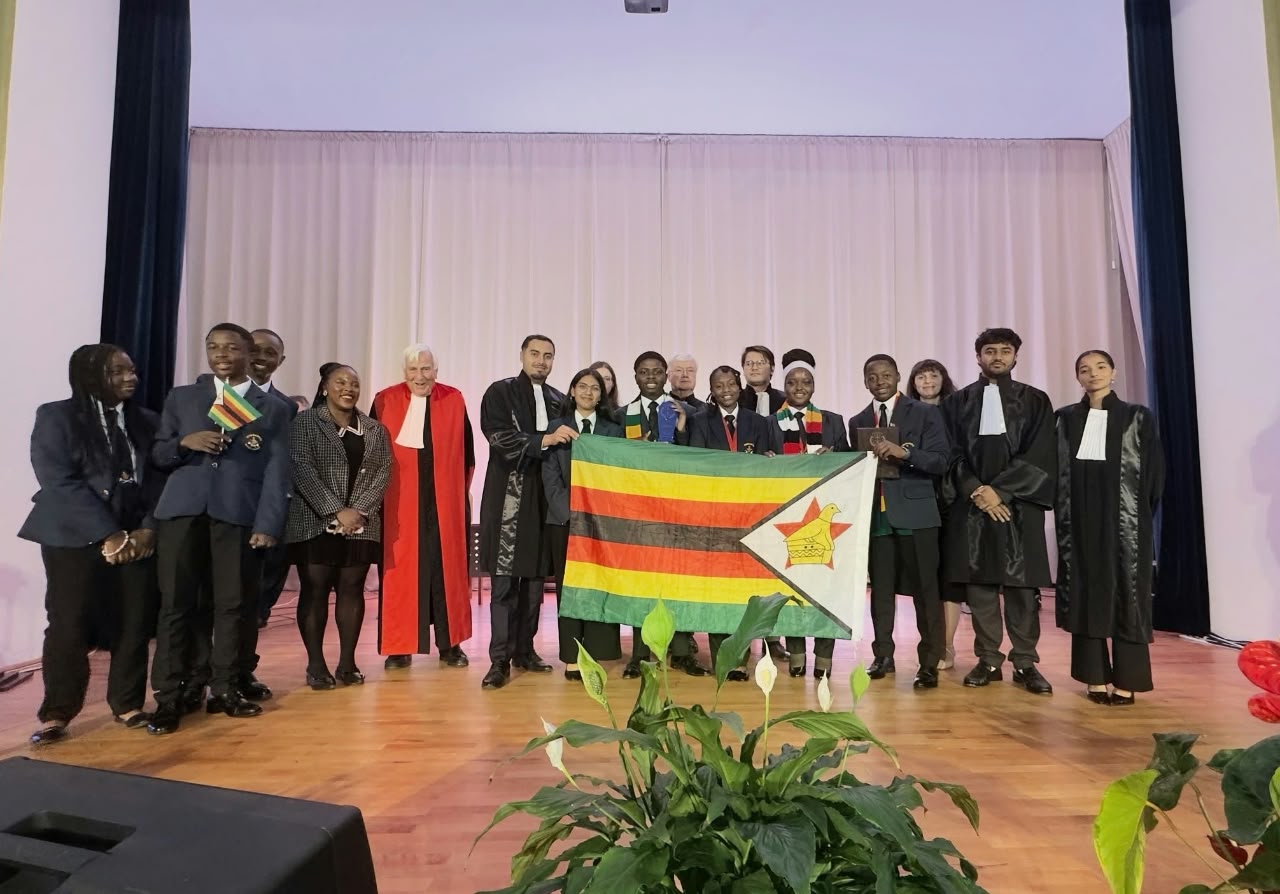
Eight Zimbabwean teenagers—two aged 13—overcame late-night training, financial hurdles and older opponents to become European Moot Court Champions
By Tendai Keith Guvamombe
Zimbabwe’s teenage legal team has brought home a historic victory after the Zimbabwe National Moot Court Team defeated France in the final of an international moot-court competition held in Romania on Monday, confirming the nation’s growing reputation for competitive advocacy at school level.
The eight-member squad emerged as European Moot Court Champions after progressing through the competition, culminating in a decisive showdown against France in the final. The tournament featured a simulated case before an international panel of judges, requiring timed oral submissions, the ability to respond to interruptions, and mastery of complex issues spanning international criminal and humanitarian law.

Zimbabwe, the only African country in the competition, came out tops ahead of the finalists, France, The Netherlands, Greece, Estonia, Bulgaria, Slovakia, Moldova, Azerbaijan, the Czech Republic, and hosts Romania.
For the team, the achievement is not only a triumph on a European stage; it is also a milestone for Zimbabwe’s legal education system, demonstrating that structured training and discipline can produce world-class performance even among teenagers still in school.
The team, a mix of youth, talent and resilience, was drawn from six Zimbabwean schools, consisting of eight students (four boys and four girls), including two 13-year-olds; Mukudzei Collen Junior Mharadzano of Milestone College and Sarah Arielle Msipa of Celebration International School.
The full team was captained by Tinodaishe Cole Makwiranzou of St John’s College, with Amyra Jain of Hellenic Academy as Deputy Team Captain.
The other squad members were Ziyanda Inzwirashe Madison Zawe and Giovanni Tawananyasha Nyatsambo, both of Tynwald High School; Tafadzwa Samuel Mwagura of Milestone College; and Courtney Falees Joseph of Bulawayo Adventist School.
Team captain, Tinodaishe Makwiranzou, said the victory was about more than representing Zimbabwe internationally; it demonstrated the potential of young Zimbabweans to excel in elite advocacy and prestigious legal forums.
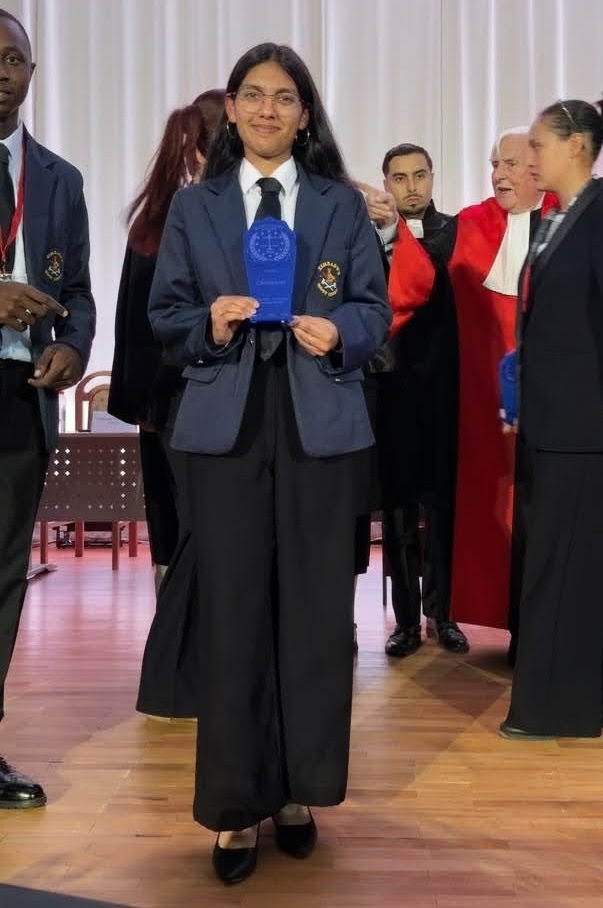
“As the only African team in the competition, the team’s success reflected the determination, resilience, and excellence that Zimbabwe’s youth can achieve,” he said.
Amyra Jain, the deputy captain said that it was unforgettable experience for her. “Our ability to take every round as it came until we eventually won helped us prove to ourselves that we deserved to be there and deserved to achieve everything that we did.”
A key factor behind the team’s progress was preparation that began long before arrival in Romania. Ahead of the about 200 students responded to a national call to represent Zimbabwe internationally.
Candidates underwent virtual and in-person trials at Dominican Convent, assessed by legal professionals and law students from the University of Zimbabwe and Herbert Chitepo Law School. The selected team was coached by Advocate Nqobile Dube, founder and head coach of Ideas Matter Academy, with support from assistant coach, Natasha Dhliwayo.
Training was conducted largely online, often from 6pm to 10pm, allowing students in different locations to prepare alongside their demanding academic schedules.
Once selected, the students faced a demanding training schedule that regularly ran from around 6pm to 10pm, with coaching led by Advocate Nqobile Dube, founder and head coach of Ideas Matter Academy, supported by assistant coaches.
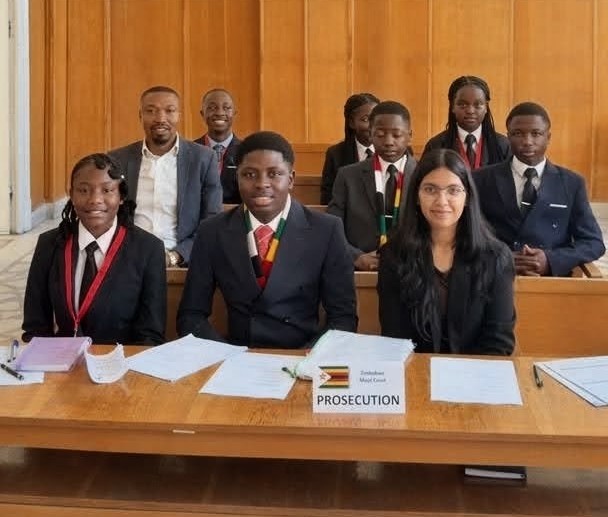
Because the students were based in different parts of the country, much of the preparation took place online, often alongside school examinations and family responsibilities.
In Romania, the team confronted a fictional case involving a simulated International Criminal Court prosecution.
The scenario revolved around a conflict between Valdris and Solvane, focusing on the prosecution of Admiral Kaspar Selden. It required both prosecution and defence teams to grapple with difficult legal questions relating to temporal jurisdiction of the International Criminal Court, perfidy, attacks against civilians, and environmental damage during armed conflict.
The case also included a humanitarian and civilian-protection element following the sinking of a fictional passenger ferry, the MV Arvellan, which resulted in the deaths of 89 people, including 17 children. An environmental dimension formed part of the legal debate as well, with a fictional oil tanker, the MT Hestvar, striking a mine and causing a massive oil spill and severe damage to the fictional Haevar Banks.
The students had to prepare to defend their reasoning under pressure. Timed submissions limited substantive advocacy to ten minutes, followed by rebuttal and surrebuttal, with judges permitted to interrupt and question speakers during oral arguments.
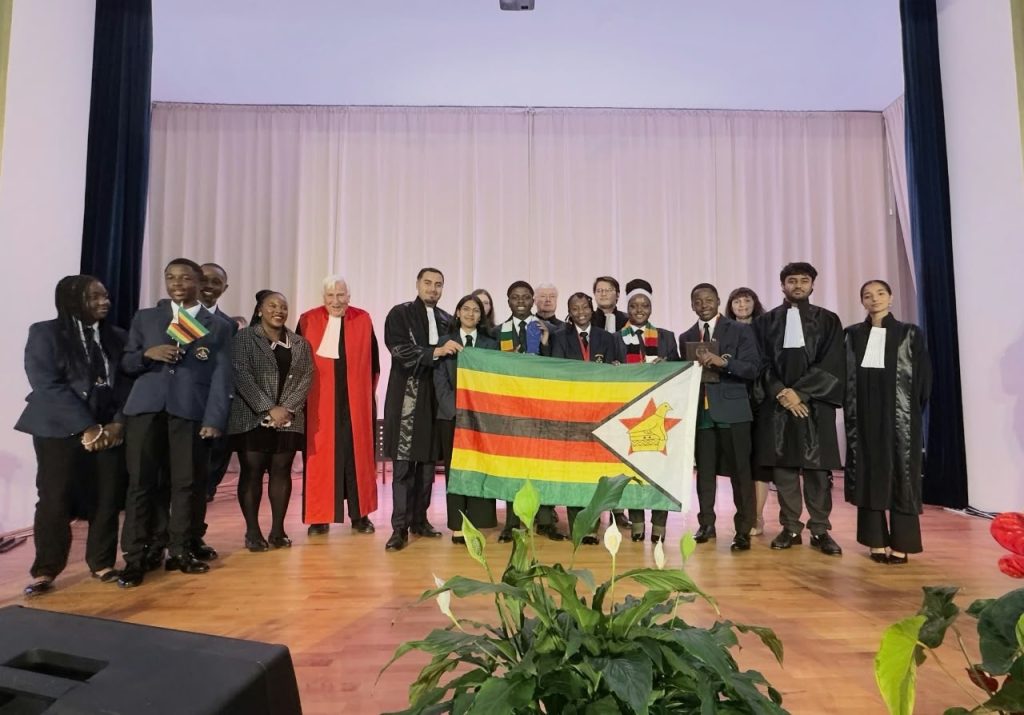
Coach Advocate Nqobile Dube said the victory reflected not only the result, but the seriousness with which the students approached the challenge.
“This victory belongs first and foremost to the eight students. They represented Zimbabwe with extraordinary discipline, courage and intellectual maturity. What makes the achievement particularly special is that they were competing against students who were, in many cases, older and more experienced. Two members of our team are only 13 years old,” he said.
Coach Dube also stressed that the training demanded sustained commitment beyond memorisation.
“The competition required students to do far more than memorise speeches. They had to analyse a complex simulated International Criminal Court case, develop prosecution and defence arguments, research challenging areas of international criminal and humanitarian law, and respond confidently to judges’ questions under intense time pressure.”
The team received US$12,000 in sponsorship from NetOne, but families and supporters still confronted costs and logistics linked to travelling from Zimbabwe to Europe.
The team returned home last Wednesday to a heroes’ welcome by their proud parents, school mates and members of the public.