By Caroline Washaya Moyo
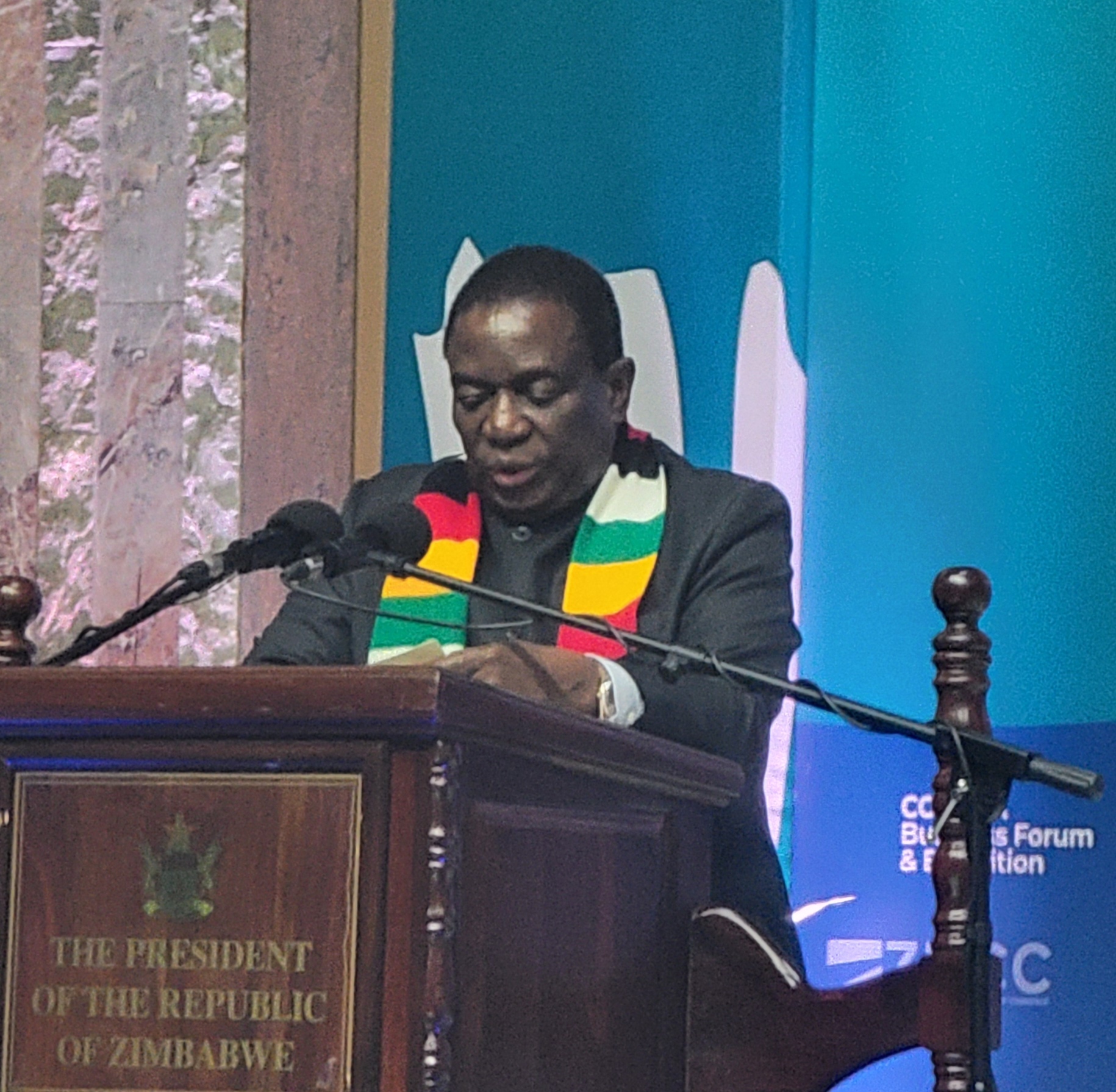
HARARE – President Emmerson Dambudzo Mnangagwa has challenged businesses across the Common Market for Eastern and Southern Africa (COMESA) to increase investment in manufacturing, mineral beneficiation and value addition to strengthen regional industries, create jobs and improve the competitiveness of African economies.
Officially opening the 19th COMESA Business Forum in Harare, President Mnangagwa urged the private sector to move beyond exporting raw commodities and embrace value addition while forging partnerships that connect producers, suppliers and consumers across the regional market.
He said stronger regional cooperation was critical to unlocking investment opportunities and ensuring that COMESA countries retained greater economic value from their natural resources.
The Forum is being held under the theme, “One Market, One Future: Advancing Inclusive Industrialisation, Investment and Regional Integration in COMESA.”
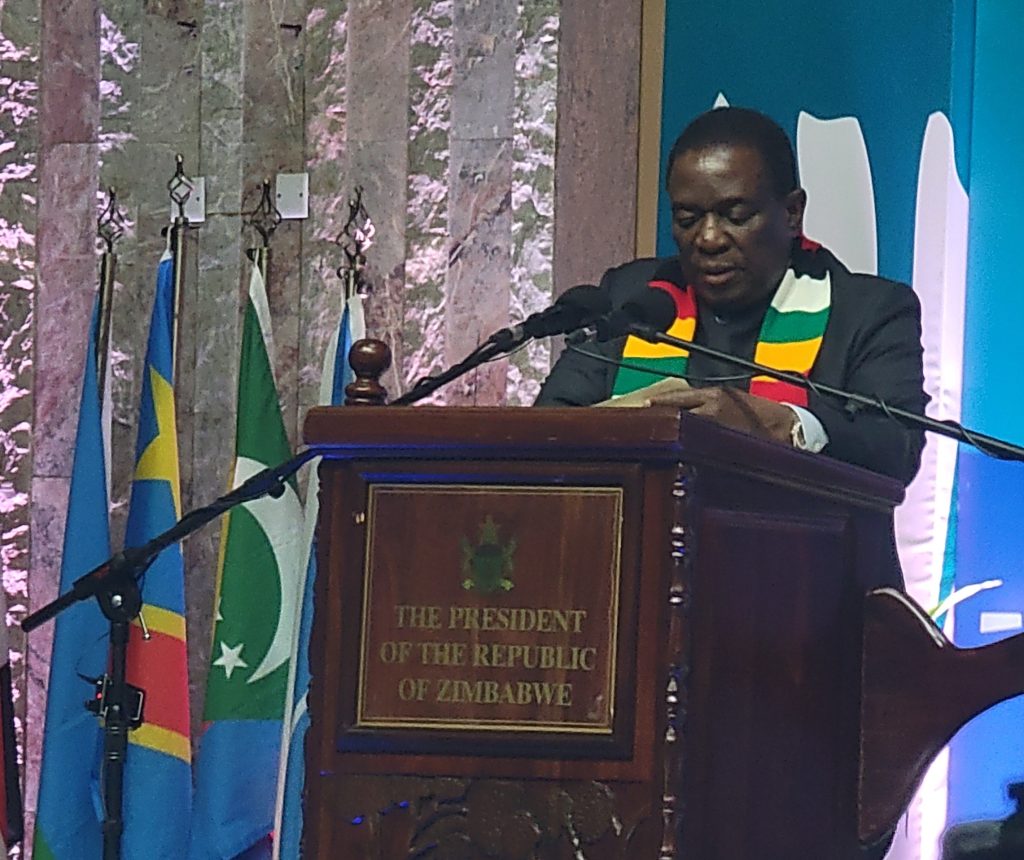
President Mnangagwa challenged delegates to develop practical recommendations for consideration at the 25th COMESA Summit of Heads of State and Government, with particular emphasis on removing barriers to business, expanding productive capacity and strengthening cross-border investment.
He identified agro-processing, leather, cotton-to-clothing, pharmaceuticals, battery materials and clean-energy technologies as sectors offering significant opportunities for investment and employment creation.
Zimbabwe’s December 2022 decision to restrict exports of unprocessed lithium ore, he said, reflected the country’s determination to promote mineral beneficiation and retain more value from its natural resources.
The President also called for increased investment in agriculture, critical minerals, energy and human capital development, particularly to harness the potential of the region’s youthful population.
He urged businesses to work with governments and development finance institutions to turn gaps in regional production into viable enterprises, skills development and employment opportunities, especially for young people.
Investments, he stressed, should not operate as isolated national projects but should connect economies through cross-border partnerships and integrated regional value chains.
A Zimbabwean agro-processor, for instance, should be able to source packaging from Zambia, access finance from a regional financial institution and work with a Kenyan distributor to reach consumers across COMESA.
Such partnerships would expand market access, improve production efficiency and strengthen economic ties among member states.
President Mnangagwa also called for stronger collaboration between COMESA and the African Continental Free Trade Area (AfCFTA), describing the regional bloc as an important building block in Africa’s broader economic integration agenda.
He said COMESA must strengthen productive capacity, remove tariff and non-tariff barriers and harmonise trade procedures to make cross-border commerce more efficient.
Infrastructure and digitalisation key to regional commerce
President Mnangagwa identified cumbersome customs procedures, rules of origin, non-tariff barriers and high business costs among the obstacles constraining commerce across COMESA.
He challenged stakeholders to propose practical solutions to reduce these costs and improve the movement of goods, services and capital across member states.
“Our borders are gateways to markets and not bottlenecks to trade,” he said.
He pointed to Zimbabwe’s modernisation of Beitbridge Border Post and the upgrading of the Chirundu One-Stop Border Post as examples of efforts to improve regional connectivity and facilitate the movement of goods and people.
Digitalisation, he said, was equally important as businesses increasingly embrace e-commerce, interoperable digital payments, electronic certificates of origin, electronic single-window systems and modern logistics.
He urged the private sector to harness digital marketing, artificial intelligence and data-driven innovation to improve productivity and respond to changing market demands.
Efficient infrastructure, modern border systems and digital solutions would help reduce transaction costs, improve competitiveness and encourage businesses to expand beyond their domestic markets.
Zimbabwe opens investment opportunities
President Mnangagwa reaffirmed Zimbabwe’s readiness to partner with investors in agriculture and agro-processing, mining and mineral beneficiation, manufacturing, energy, infrastructure, tourism, information and communication technology, pharmaceuticals and the digital economy.
He said the country was particularly interested in investments that link suppliers, producers and consumers across COMESA, rather than focusing solely on the domestic market.
The Government’s “Zimbabwe is Open for Business” policy, alongside the principle that Zimbabwe is a friend to all and an enemy to none, continued to guide the country’s pursuit of mutually beneficial partnerships.
President Mnangagwa encouraged investors and entrepreneurs to seize opportunities across the regional market, particularly those capable of strengthening supply chains and generating employment.
He welcomed the Forum’s focus on de-risking trade and investment and closing the financing gap affecting small and medium-sized enterprises (SMEs).
Improved access to finance, he said, would enable women and young entrepreneurs to participate more meaningfully in regional value chains.
The accompanying Multi-Sectoral International Exhibition was also identified as an important platform for turning discussions into commercial partnerships.
President Mnangagwa urged delegates to use the exhibition to connect buyers with producers, investors with viable projects, manufacturers with regional suppliers, and micro, small and medium-sized enterprises with distributors and new markets.
These connections, he said, should translate into increased investment, production and business opportunities across the bloc.
Zimbabwe positions itself for continental trade growth
President Mnangagwa said Zimbabwe’s hosting of the headquarters of the Intra-African Trade Fair Company in Harare, together with its preparations to host the Intra-African Trade Fair in 2029, positioned the country to contribute to Africa’s wider economic agenda.
He said Zimbabwe looked forward to advancing the priorities of the COMESA Medium-Term Strategic Plan 2026-2030 and the AfCFTA, strengthening links between regional and continental economic initiatives.
The President called on businesses to work closely with their respective governments and development institutions to build a more integrated and productive COMESA region.
“In Zimbabwe, we say, ‘Nyika inovakwa, inotongwa, inonamatirwa nevene vayo’, which translates to a country is built, governed and prayed for by its own people,” he said.
He said the responsibility for regional development rested on collective action by governments, the private sector and development partners, adding that COMESA’s effectiveness would ultimately be measured by the prosperity of its people and businesses.
President Mnangagwa called for renewed commitment to investment, value addition and regional cooperation to ensure that the benefits of integration reach all communities and that no country or sector is left behind.
He commended the COMESA Secretariat, COMESA Business Council, ZimTrade, the private sector and other partners for their role in organising the Forum before declaring the 19th COMESA Business Forum officially open.