By Caroline Washaya Moyo
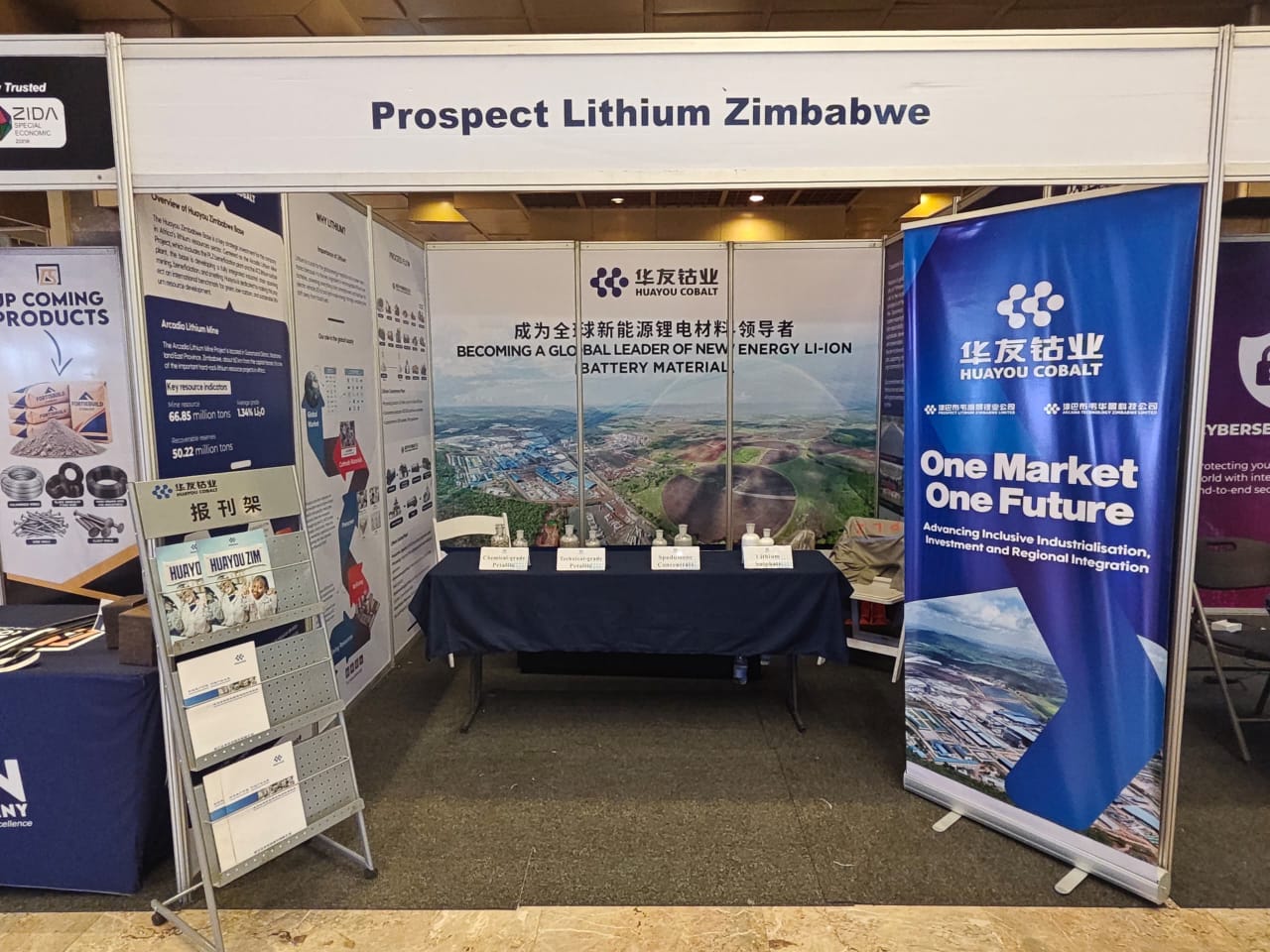
Prospect Lithium Zimbabwe (PLZ) has used its participation at the 2026 Common Market for Eastern and Southern Africa (COMESA) exhibition to highlight the growing business opportunities in mineral beneficiation, positioning lithium processing as a catalyst for regional trade, industrial development and investment-led economic growth.
The company’s participation underscores the importance of connecting Zimbabwe’s mineral wealth to regional markets, industrial supply chains and investment opportunities within the COMESA trading bloc, as the country intensifies efforts to move beyond the export of raw materials towards the production of higher-value mineral products.
With regional economic integration creating opportunities for businesses to access wider markets, develop commercial partnerships and strengthen cross-border trade, mineral processing presents Zimbabwe with an opportunity to expand its industrial footprint and capture greater value from its natural resources.
PLZ’s investment in lithium processing through Arcadia Technology Zimbabwe (ATZ), a lithium sulphate processing plant, demonstrates how investment in domestic mineral value addition can support this transition. By developing processing capacity within Zimbabwe, the company is contributing to efforts to retain more economic value locally while creating opportunities for the country to participate more actively in international mineral supply chains.
The investment aligns with President Emmerson Dambudzo Mnangagwa’s call for increased value addition and beneficiation of Zimbabwe’s mineral resources as part of the country’s drive towards Vision 2030. It also supports the broader objectives of the National Development Strategy 2 (NDS2), which places emphasis on industrial transformation, increased production, export growth and sustainable economic development.
Unlocking regional business opportunities
COMESA provides an important platform for businesses to explore new markets, establish strategic partnerships and identify opportunities for investment and trade across member states. For Zimbabwe’s mining and manufacturing sectors, this creates scope to strengthen commercial relationships with regional businesses while improving the competitiveness of locally processed products.
For PLZ, participation in the regional exhibition offers an opportunity to showcase the business case for investing in mineral beneficiation and to highlight the role of processing infrastructure in building a more diversified, export-oriented economy.
The development of domestic lithium processing capacity can also stimulate demand for supporting services, including transport and logistics, engineering, equipment maintenance, industrial supplies and other specialised business services. These linkages create opportunities for local enterprises to participate in the wider mining value chain and for regional companies to explore partnerships with Zimbabwean industry.
As businesses across the region seek to expand trade and strengthen industrial capacity, investments in mineral processing can help create a foundation for deeper economic cooperation, with Zimbabwe leveraging its mineral resources and productive capabilities to serve broader markets.
From mineral extraction to industrial competitiveness
Zimbabwe’s lithium resources offer significant potential as global industries continue to pursue materials used in energy storage and battery technologies. However, the long-term economic benefits of this resource endowment depend not only on extraction, but also on the country’s ability to develop processing capacity, attract investment and build the skills required to compete in higher-value segments of the mineral industry.
The establishment of ATZ represents a step in this direction, supporting the shift from exporting predominantly raw minerals and concentrates towards producing processed materials within the country.
This transition has implications beyond the mining sector. Greater processing capacity can support technology transfer, technical skills development, employment creation and the emergence of businesses supplying goods and services to industrial operations.
It can also strengthen Zimbabwe’s proposition to investors seeking opportunities in mineral processing, particularly where reliable infrastructure, supportive policies, access to markets and competitive production capabilities combine to create a viable business environment.
For regional trade, the opportunity lies in building stronger connections between mineral-producing economies, processing industries, manufacturers and end-user markets. Such connections can help diversify trade, deepen industrial cooperation and improve the region’s participation in global value chains.
Driving Zimbabwe’s Vision 2030 ambitions
The government’s emphasis on beneficiation reflects a broader objective to ensure that the country derives greater economic returns from its natural resources. By encouraging investment in processing and related industries, Zimbabwe aims to increase export earnings, broaden its industrial base and create more opportunities for businesses and workers.
In this context, private-sector investments such as those undertaken by PLZ can complement national development priorities by expanding productive capacity and demonstrating the commercial potential of value addition.
COMESA’s regional business platform reinforces the importance of linking these investments to wider trade and investment opportunities. The potential benefits extend beyond individual companies to include local suppliers, logistics operators, service providers and other enterprises that can participate in an expanding industrial ecosystem.
As Zimbabwe advances towards Vision 2030, the challenge will be to translate its mineral resource advantages into competitive industries, diversified exports and stronger participation in regional commerce.
Through its investment in lithium processing and participation at COMESA 2026, Prospect Lithium Zimbabwe is highlighting the role that mineral beneficiation can play in this transformation, placing domestic value creation, regional business engagement and industrial competitiveness at the centre of Zimbabwe’s mineral development agenda.