
By Tendai Keith Guvamombe
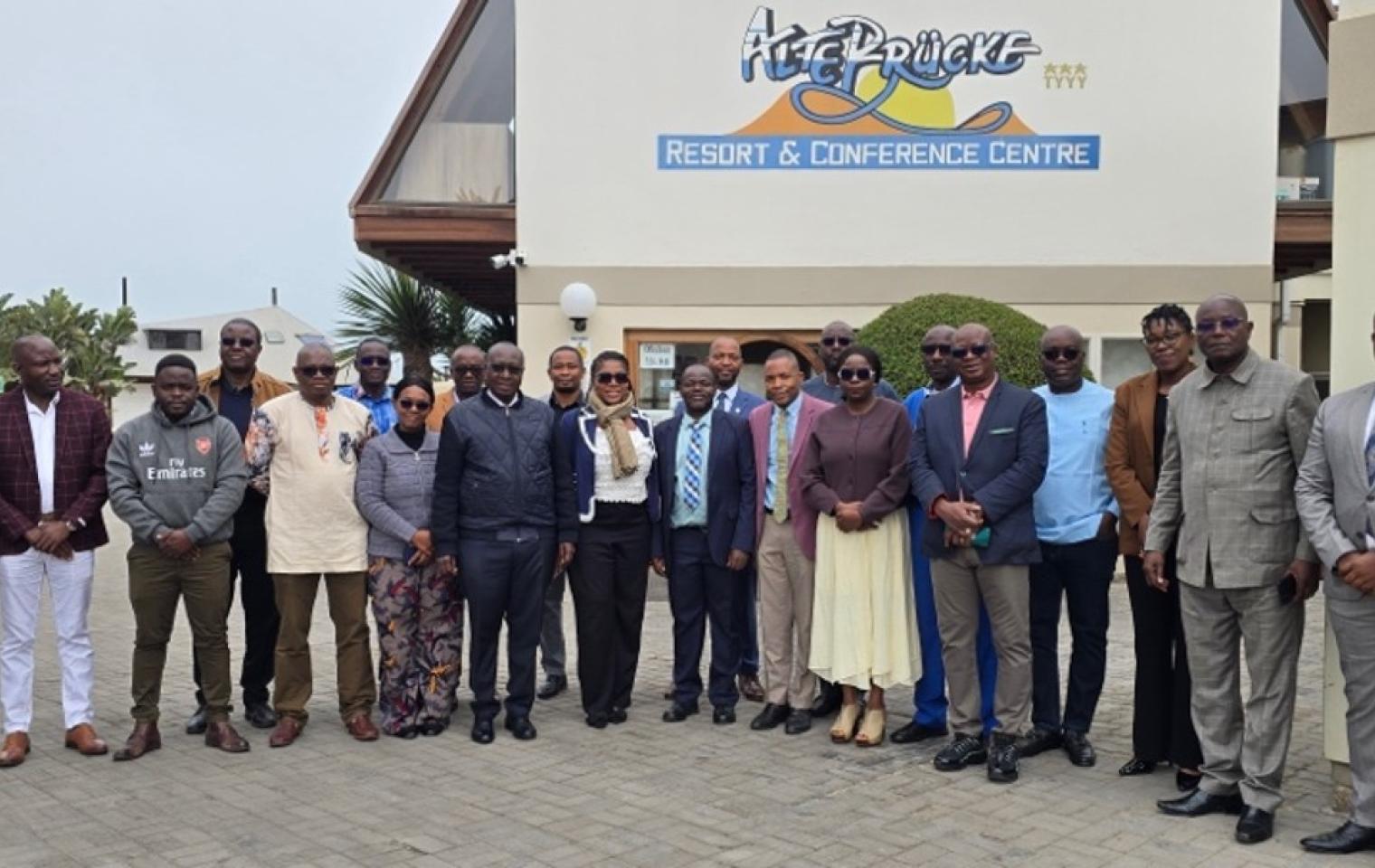
In Swakopmund, Namibia, from 21 to 24 September 2026, the African Union Commission (AUC) has convened continental, regional and national stakeholders in Swakopmund, Namibia to strengthen the communication and use of weather, climate and early warning information enabling decision- makers and communities to take timely action. The four day workshop brought together information producers and users to address communication gaps and translate weather and climate forecasts into practical preparedness and early action.
In Swakopmund, Namibia, from 21 to 24 September 2026, the African Union Commission (AUC) has convened continental, regional and national stakeholders in Swakopmund, Namibia to strengthen the communication and use of weather, climate and early warning information enabling decision- makers and communities to take timely action. The four day workshop brought together information producers and users to address communication gaps and translate weather and climate forecasts into practical preparedness and early action.
Convened by the AUC’s Directorate of Sustainable Environment and Blue Economy (SEBE) through the Intra-ACP Climate Services and Related Applications (ClimSA) Programme and the Strengthening Early Warning in Africa (SEWA) Project, the workshop also focuses on sustaining the systems, skills and partnerships developed through ClimSA as the programme approaches its final phase. With approximately 40% of Africa’s population still lacking access to early warning systems, and droughts, floods, storms and tropical cyclones account for around 70% of disaster losses on the continent. Effective forecasts must be complemented by a clear accessible communication that enables people to understand the risks and act promptly
Turning early warnings into action
Speaking on behalf of the Governor of theGovernor of the Erongo Region, Dr Sam Ntelamo, Chief Regional Officer of the Erongo Regional Council, highlighted the importance of connecting weather and climate warning production with practical action, “this meeting should improve better practised in the entire chain between producing an early warning and enabling people to act on it.” Underscoring that an accurate forecast alone is insufficient; information must reach the right people through trusted channels, in understandable formats, and early enough to support decisions.
Dr. Jolly Wasambo, AUC ClimSA Programme Coordinator, placed the workshop within Africa’s climate resilience and Agenda 2063 ambitions. Noting that the continent’s vulnerability to climate change and the dependence of many economies and livelihoods on climate-sensitive sectors. He stressed for technical advances must deliver tangible benefits for African citizens and communities, with stronger user engagement ensuring that weather information reaches the right people, in the right manner and at the right time. He also recognised the partnerships and financial support of the European Union under the Global Framework of Climate Services.
Representing the Executive Secretary of the Southern African Development Community (SADC), Dr Obadias J. Cossa, from the SADC Climate Services Centre Programme Office, Climate Modelling Unit, stressed that the value of climate and early warning information depends on whether it reaches communities on time, or whether it is meaningful to citizens and whether it enables action. Despite improvements in climate monitoring, seasonal forecasting and early warning, gaps remain between forecasts, sectoral advisories, public warnings and early action. His remarks called for clearer responsibilities and stronger communication, training, coordination and community engagement to make information “easier to understand, easier to trust and easier to act upon.”
Mr. Godfroid Nshishirima, speaking on behalf of the Director General of the African Centre of Meteorological Applications for Development (ACMAD), emphasised that there is an opportunity to jointly assess and improve climate communication. He highlighted the trainings that responds to identified communication needs as an essential pillar to sustaining the progress made, strengthen institutional capacities, and retaining essential skills. ACMAD reaffirmed its commitment to working with partners to supporting implementation of the workshop outcomes and the agreed way forward.
Sustaining ClimSA investments in African institutions.
The workshop addresses a pressing priority for the AU of building a climate-resilient Africa to support sustainable development. It brought together Regional Climate Centres (RCCs), Regional Specialized Meteorological Centres (RSMCs), Regional Training Centres (RTCs), Regional Economic Communities (RECs), National Meteorological and Hydrological Services (NMHSs), situation room actors and communicators. Participants examined the entire climate information chain, from observation and forecasting to sectoral advisories, dissemination, user feedback, preparedness and anticipatory action.
Experiences from Cameroon, Kenya, Tanzania, Uganda and Namibia provided practical lessons on how they engage users in the design of climate services, co-producing information, selecting appropriate channels for the dissemination of weather information and how they incorporate feedback. These lessons are then intended to inform an action plan and roadmap outlining priority actions, responsible institutions, implementation timelines and future training needs especially the use of e-learning platforms.
For ClimSA, a key sustainability priority is to embed its systems, capacities, partnerships and communication mechanisms developed by ClimSA within the continental, regional and national institutions so that they remain operational beyond the programme. Clear institutional responsibilities, ongoing trainings and sustained engagement with users are central to ensuring sustainability of these AU-EU investments continue to support preparedness and early action.
Key priorities for strengthening technical capacities, regional institutions and policy engagement include:
- Sustaining technical capacity:
Continue training Member States on weather and environmental e-stations, including PUMA 2025 and ClimSA stations. - Strengthening regional institutions:
Support the Central African Climate Application and Prediction Centre (CAPC-AC) in its role as the Regional Climate Centre for the Economic Community of Central African States (ECCAS) region. - Advancing policy engagement:
Promote policy dialogues on mainstreaming climate services into relevant sectoral policies and development planning. - Promoting knowledge exchange:
Share experiences, good practices and lessons learned through international forums.
Together, these priorities aim to strengthen institutional ownership, sustain the achievements of ClimSA and apply the lessons from ClimSA to strengthen the link between climate information in decisions making that help protect lives, livelihoods and development gains.