
By Caroline Washaya Moyo
HARARE – Zimbabwe has urged COMESA member states to dismantle trade barriers, accelerate green industrialisation and invest in local manufacturing to transform Africa’s natural resources into higher-value products, jobs and sustainable economic growth.
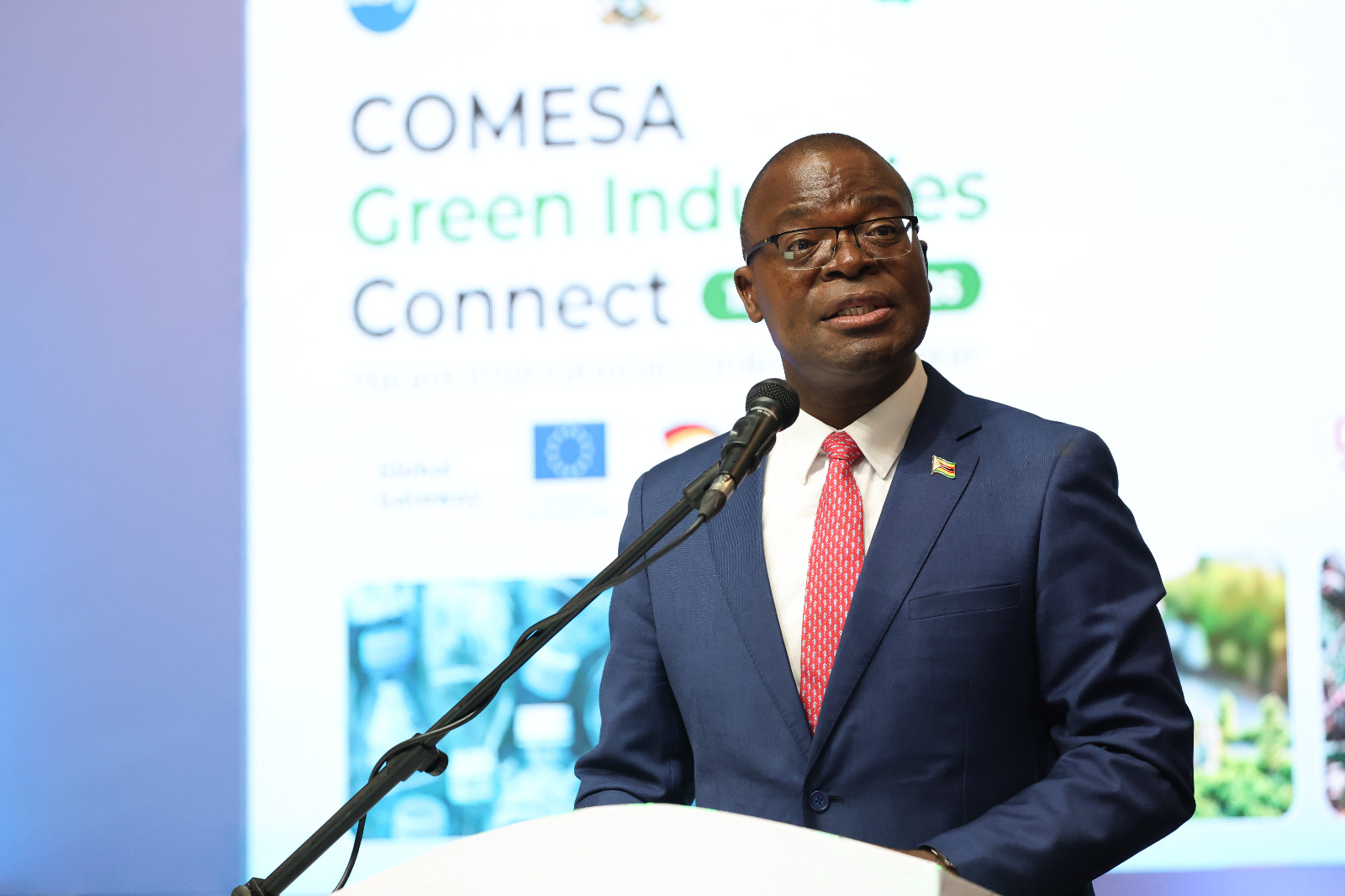
Foreign Affairs and International Trade Minister Professor Amon Murwira made the call at the COMESA Green Industries Connect Conference at the Harare International Conference Centre, where he challenged member states to translate regional industrialisation commitments into tangible economic outcomes.
He said Africa must move beyond exporting raw materials and importing expensive finished goods towards an integrated production system that retains more value, technology, skills and income within the continent.
“Sustainable industrialisation is not separate from industrial growth. It is an essential condition for long-term competitiveness, resilience and productivity,” Professor Murwira said.
He said Zimbabwe’s industrialisation agenda was anchored in Vision 2030, the National Development Strategy 2 (NDS2), the National Industrial Development Policy and the Local Content Strategy.
Remove barriers to regional trade
Professor Murwira called on COMESA member states to honour their regional integration commitments by removing tariff and non-tariff barriers that restrict the movement of goods and services across the common market.
He argued that stronger intra-regional trade depended on increased production and manufacturing, urging countries to develop industries capable of supplying regional and international markets.
“Trade presupposes production and manufacturing,” he said.
The minister said COMESA’s common market should enable member states to combine their complementary agricultural resources, mineral wealth, technical skills and manufacturing capabilities to build competitive regional value chains.
He also cited Section 12(2) of Zimbabwe’s Constitution in support of the country’s commitment to Pan-Africanism and regional integration.
Circular economy offers new opportunities
Professor Murwira said green industrialisation required a shift from the traditional model of extracting and exporting resources towards a circular economy based on transforming, reusing and regenerating materials.
He noted that African communities had long practised elements of the circular economy through resource conservation, water harvesting, seed selection, natural medicine and sustainable land management.
Modern technology and scientific research, he said, could strengthen these practices and unlock commercial opportunities in agro-processing, pharmaceuticals, leather and mineral beneficiation.
The minister urged countries to recognise the economic potential of indigenous fruits, medicinal plants and other locally available resources, arguing that Africa should develop products suited to its own natural and climatic conditions rather than rely excessively on imports.
He also called on universities and research institutions to validate indigenous knowledge, improve it through scientific research and protect intellectual property rights so that it could generate marketable products and services.
“Green industrialisation is not simply the addition of solar panels to an old production plant. It is a cycle of thinking,” he said.
He added that effective circular economy systems required investment in recycling infrastructure, waste collection, appropriate standards and reliable markets for recycled materials.
Zimbabwe advances cleaner production
Professor Murwira said Zimbabwe was working with the Climate Technology Centre and Network on a national decarbonisation roadmap for the cement sector, while iron and steel, mineral processing and other manufacturing industries also offered opportunities to reduce emissions and improve efficiency.
Investments in renewable energy, energy-efficient machinery and water recycling systems were helping manufacturing firms lower production costs and improve reliability, he said.
He called for stronger regional cooperation in recycling and resource recovery, with small and medium-sized enterprises, women and young entrepreneurs given opportunities to participate in green businesses and employment creation.
Proposal for regional circular economy fund
To support the transition, Professor Murwira proposed that COMESA explore establishing a COMESA Circular Economy Fund to finance viable businesses investing in cleaner production, energy-efficient equipment, recycling infrastructure and the conversion of waste into productive inputs.
He said the proposed facility would require sustainable financing, transparent eligibility criteria and rigorous project assessment to ensure measurable industrial and environmental benefits.
The minister also stressed the importance of public-private partnerships, saying governments, businesses, financial institutions, development partners and research organisations must work together to turn industrial opportunities into bankable projects.
Governments, he said, should provide predictable policies, reliable infrastructure and an enabling investment environment, while businesses should invest in productive capacity and adopt cleaner technologies.
He further urged COMESA countries to align green standards, strengthen product testing and improve conformity assessment systems to reduce compliance costs and facilitate cross-border trade.
Electric mobility and mineral beneficiation
Professor Murwira identified electric mobility as another opportunity for regional manufacturing, calling on COMESA countries to explore electric vehicle assembly, charging infrastructure, battery technologies, maintenance services and component production.
He said the region should move beyond importing finished products to developing the skills and technologies required to participate in emerging industrial value chains.
Zimbabwe’s shipment of locally processed lithium sulphate to China illustrated the potential of moving further up the mineral value chain, he said.
The minister called for greater regional cooperation in processing raw materials and manufacturing intermediate and finished products, enabling member states to capture a larger share of the economic benefits generated by their resources.
From commitments to implementation
Professor Murwira urged COMESA member states to turn existing regional strategies into funded programmes with clear responsibilities, measurable targets and practical outcomes.
He cited the COMESA Industrialisation Strategy and Action Plan, which identifies agro-processing, leather, textiles, energy and mineral beneficiation as priority sectors.
He also highlighted commitments made by ministers responsible for industry and investment at their meeting on 8 September 2026 to promote an inclusive transition to a circular economy and support green and circular businesses. The COMESA Green Pharmaceutical Manufacturing Strategy for 2026 to 2035 was another initiative identified as important to regional industrial development.
The minister said the COMESA Secretariat had an important coordinating role, but national governments must ensure that regional commitments translated into investment, modernised production facilities, viable enterprises and employment.
He said Zimbabwe was ready to work with member states, the COMESA Secretariat and the private sector to advance shared industrialisation priorities during its COMESA chairmanship.
Professor Murwira said the region’s success would depend on its ability to combine responsible resource use with competitive manufacturing, innovation and inclusive economic growth.
The conference’s central challenge is therefore to turn the vision of One Market, One Future into practical cooperation that allows African countries to transform their own resources into wealth, strengthen regional trade and deliver lasting benefits to their people.